
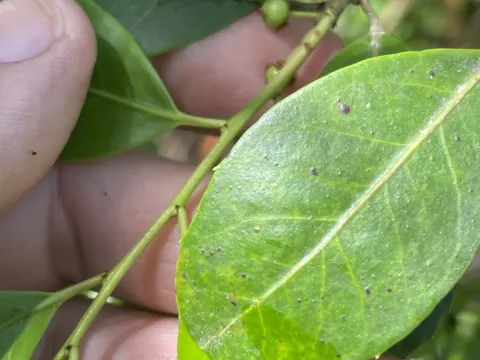
Sweet gallberry
Ilex coriacea
Sweet gallberry (Ilex coriacea) is an evergreen shrub belonging to the Aquifoliaceae family. Native to the southeastern United States, it is typically found in pocosin habitats, swamps, and along the edges of forested wetlands.
What the section contains
Sweet gallberry
This species thrives in acidic, organic-rich, and consistently moist soils. Unlike many other holly species, Ilex coriacea is highly tolerant of wet soil conditions, making it an ideal choice for low-lying, damp areas in a landscape.
The plant prefers partial shade to full sun, provided that soil moisture is maintained. It requires protection from drying winds and thrives in environments where humidity levels are relatively high.
Regarding climate, sweet gallberry is adapted to mild, humid conditions. It is not highly tolerant of severe prolonged frosts, which limits its primary cultivation range to warmer temperate and subtropical zones.
Its primary use is ornamental, serving as a robust evergreen shrub for hedge formation and wildlife habitat restoration. The dark, glossy foliage and persistent fruits provide year-round visual appeal and food for local bird species.
The plant is susceptible to fungal leaf spots, especially in crowded planting conditions where air circulation is poor. Proper spacing and sanitization of fallen leaves help mitigate these risks.
Scale insects represent the most significant pest threat to sweet gallberry. These insects attach to twigs and leaves, extracting nutrients and potentially leading to branch dieback if infestations are not controlled.
Aphids can occasionally colonize young growth in the spring. While rarely fatal, they can cause leaf curling and serve as vectors for secondary infections if left untreated for extended periods.
Root rot is a major concern if the plant is forced into heavy, non-draining soil types. Despite its love for moisture, the soil must be aerated enough to prevent anaerobic conditions around the root system.
Integrated pest management, involving the use of horticultural oils and regular monitoring, is the most effective way to maintain the health and vigor of this shrub throughout the growing season.