
Spiny holly
Ilex spinigera
Description
Growing requirements
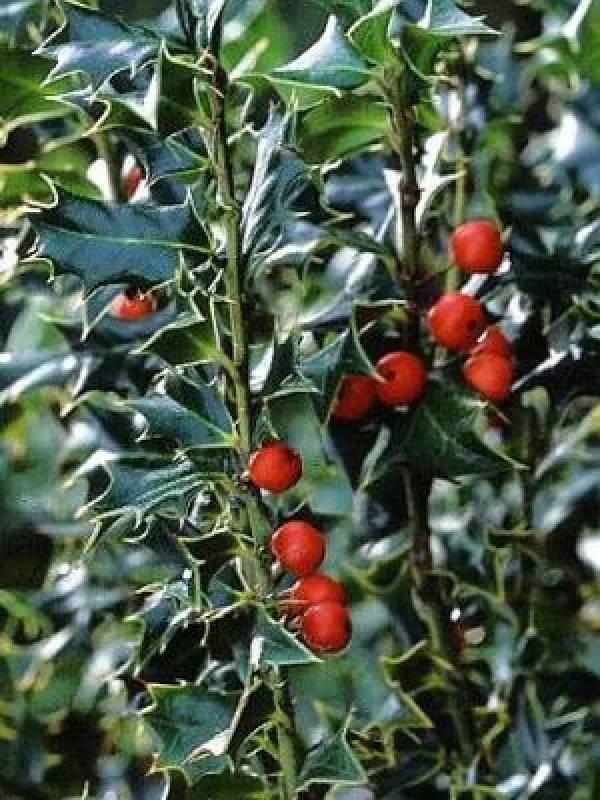
Spiny holly (Ilex spinigera) belongs to the Aquifoliaceae family. It is a slow-growing evergreen shrub recognized by its characteristic spiny leaves and bright, berry-like drupes.
The plant thrives in temperate climates with high atmospheric humidity. It is sensitive to extreme frost and drying winds, which often cause leaf scorch in exposed locations.
Ideally, this species requires deep, fertile, and well-draining soils with an acidic to neutral pH. Poorly drained heavy clays can cause severe root rot issues.
In terms of light exposure, the plant is quite versatile, though it prefers partial shade. Direct sun in hot regions can lead to excessive transpiration and damage to the foliage.
Routine agricultural maintenance includes mulching to maintain soil moisture and periodic pruning to maintain a structured shape and encourage healthy new growth.
Main diseases and pests
Scale insects represent the most significant pest threat to Ilex spinigera, clustering on branches and stems to feed on plant sap, weakening the structure.
Leaf spot diseases are common when the plant is stressed or grown in poorly ventilated areas with high humidity, leading to premature leaf drop.
Phytophthora root rot is a devastating pathogen for holly, especially in landscapes where drainage is neglected and soil compaction is high.
Integrated pest management strategies should be prioritized, involving the regular inspection of the foliage and the application of horticultural oils for scale control.
Proper airflow is essential; planting density should be carefully calculated to ensure that all parts of the plant receive adequate ventilation after rain or irrigation.