
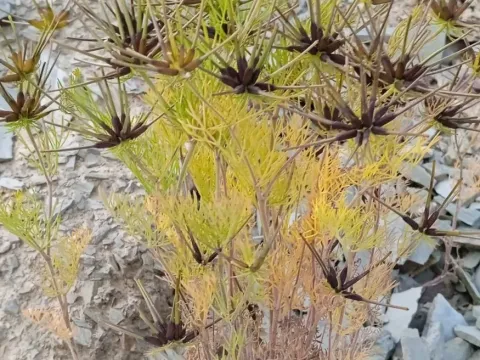
Scandix stellata
Scandix stellata
Scandix stellata is an annual herbaceous plant belonging to the Apiaceae (carrot/parsley) family. In its natural range, the plant typically follows an autumn or early spring sowing pattern, characteristic of ephemeral species.
What the section contains
Scandix stellata
Seeds should be sown directly into the open ground at a depth of no more than 1-2 centimeters. Ensuring proper soil contact is crucial for uniform germination during the period of moderate temperatures.
The optimal sowing time in regions with mild climates is October or November. This timing allows the seeds to undergo necessary stratification and establish roots before the onset of intense summer heat.
When sowing in the spring, it must be done as early as possible, immediately after the snow melts and the topsoil thaws. Delays in sowing often lead to reduced germination rates due to the rapid arrival of the dry season.
Sowing density should be moderate to allow each plant sufficient space for rosette development and subsequent growth of the flowering stalk.
This crop has specific light requirements, preferring open areas with full direct sunlight. Shade tolerance is extremely low, and the plants develop poorly under suppressed light conditions.
The ideal soil conditions consist of light, well-drained substrates. Scandix stellata reacts very negatively to water stagnation and heavy clay soils, which promote root system decay.
The optimal soil pH is neutral or slightly alkaline. The plant is well-adapted to rocky and sandy soil types common in Mediterranean regions.
During the active growth period, the crop requires moderate moisture; however, from the onset of flowering and seed ripening, irrigation should be significantly reduced or ceased entirely.
A moderate temperature regime is essential. The plant exhibits good resistance to short-term spring frosts but suffers significantly under extreme summer heat.
The green mass yield of Scandix stellata is relatively low, as the plant belongs to the short-stature herbaceous group. The primary value lies in the seeds, which develop inside distinctive elongated, star-shaped pods.
In industrial cultivation, the output of dry raw material is limited by the biological productivity of a single plant. The use of phosphorus and potassium-based fertilizers can slightly improve seed productivity.
Mass accumulation of biomass occurs over a short timeframe, typical for ephemeral plants. The vegetative cycle often does not exceed 2-3 months until the leaves begin to yellow.
To improve yields, regular weeding is necessary, as the crop struggles to compete with more aggressive weeds during the initial stages of development.
Harvesting is primarily done manually due to the fragility of the flowering stalks and the uneven ripening of seeds on a single plant.
The main threat to this crop is fungal diseases arising from excessive soil moisture. Powdery mildew can affect the leaves if air circulation within the planting rows is insufficient.
Aphid pests often colonize young shoots during the budding phase. This leads to the deformation of flowering stalks and a general weakening of the plant.
Slugs and snails can cause serious damage to seedlings in humid weather. It is recommended to use preventive protection methods and maintain cleanliness in the inter-row spaces.
Root rots are the most dangerous threats if irrigation practices are ignored. Prevention involves improving soil aeration and avoiding over-watering.
Nematodes, which attack the root system, may also be present on sites where crop rotation with other Apiaceae members is not strictly followed.
Harvesting is conducted during the wax-ripe phase of the seeds. It is vital to collect the material before the pods begin to naturally shatter and drop seeds onto the soil.
The cut stalks should be tied into small bundles and dried under a shaded canopy. This precaution allows the seeds to finish ripening without losing quality under direct sunlight exposure.
After drying, the seed material is threshed manually. Due to the specific shape of the fruit with its long "beak," the cleaning process requires care and precision.
Storage of the collected seeds should be carried out in a dry, cool place using paper packaging. Seed moisture content at the time of storage should not exceed 10-12%.
Adherence to proper harvest protocols allows the seeds to maintain high germination capacity for 1-2 years, provided there are no sharp temperature fluctuations.