
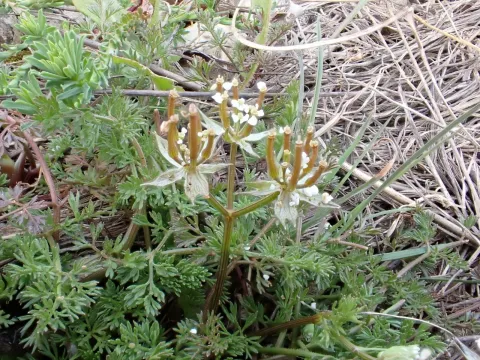
Scandix macrorhyncha
Scandix macrorhyncha
Scandix macrorhyncha belongs to the Apiaceae family. It is an annual herbaceous plant that reproduces through seeds. In agricultural practice, sowing is best performed in late autumn or early spring to ensure the seeds undergo necessary natural stratification for uniform germination.
What the section contains
Scandix macrorhyncha
Choose sunny sites with loose, well-drained soil for sowing. Seeds should be planted at a depth of 1-2 cm, maintaining row spacing of approximately 30 cm to provide adequate space for the development of leaf rosettes and proper air circulation.
The optimal temperature range for germination is between 12 and 15 degrees Celsius. The crop exhibits moderate resistance to cool spring temperatures, allowing seedlings to survive mild frost without significant tissue damage.
Plant density management is crucial for yields. Overcrowding can lead to stunted growth and increase the risk of fungal infections in the lower parts of the stem due to poor aeration and humidity accumulation.
The plant follows a rapid life cycle, transitioning from a leafy rosette phase to a reproductive phase, where it develops distinctive elongated fruits, which are a hallmark botanical feature of this specific species.
Scandix macrorhyncha thrives in loose, humus-rich loamy or sandy soils with a neutral pH level between 6.5 and 7.5. Waterlogged conditions must be avoided as they lead to root rot and significant crop failure.
Being a sun-loving plant, it requires full exposure to sunlight for optimal development. Shaded areas lead to a decrease in essential oil content, which directly reduces the quality and market value of the harvested raw material.
Water requirements are moderate. During the peak growth phase, regular but careful watering is necessary to keep the soil moist but not soggy. Drip irrigation is the most effective method for maintaining soil moisture levels.
Mineral nutrition should focus on balanced fertilizers during the early vegetative stages. Excessive nitrogen application during the flowering phase is discouraged as it may negatively impact the development of seeds and aromatic properties.
Regular maintenance involves inter-row cultivation to prevent soil crusting. This practice improves soil aeration, enhances moisture retention, and helps control weeds that compete with the crop for essential soil nutrients.
The primary threats include fungal diseases such as powdery mildew and various rusts. These are often triggered by high humidity and poor ventilation. Preventive measures include maintaining a proper crop rotation and ensuring sufficient airflow.
Aphids and carrot flies are the most common insect pests. They cause damage to tender leaves and roots. Integrated pest management, including the use of biological control agents, is recommended to minimize crop damage without chemical residues.
Slugs and snails can be highly destructive during the early growth stages. Physical barriers like mulching or using traps are effective ways to protect young plants without the need for toxic molluscicides.
Root rot is primarily caused by poor drainage or incorrect irrigation techniques. To protect the crop, avoid overhead watering, which promotes disease spread; instead, focus on delivering water directly to the root zone.
Consistent field monitoring is essential. Early detection of any localized infections allows for quick removal of affected plants, which prevents the disease from spreading throughout the entire plot and ensures a healthy harvest.
Harvesting for greens should occur before the onset of mass flowering, when the concentration of essential oils is at its peak. It is recommended to harvest in the early morning after the dew has evaporated.
For seed production, wait until the fruits turn brown. Because the plant is prone to seed shattering when fully mature, harvesting should be performed promptly as soon as the seeds reach the desired maturity but remain attached.
After harvesting, the material must be dried in shaded, well-ventilated areas. Direct sunlight should be avoided to prevent the degradation of aromatic compounds and to maintain the quality of the harvested produce.
The final processing involves mechanical sorting or sieving to remove debris and unwanted plant parts. Clean, dried seeds can then be packaged and stored in a cool, dry place to maintain their viability and quality.
The economic value of Scandix macrorhyncha lies in its use as a culinary herb and in the pharmaceutical industry. Proper post-harvest handling ensures that the crop retains its beneficial properties throughout the storage period.