
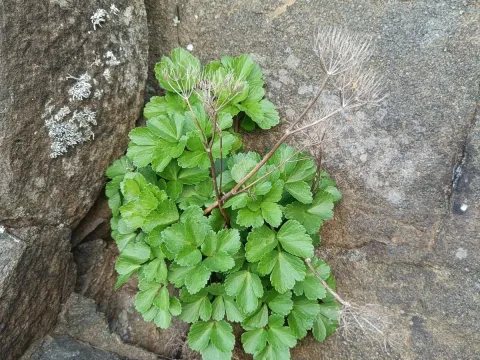
Scotch lovage
Ligusticum scothicum
Scotch lovage (Ligusticum scothicum), a member of the Apiaceae family, is typically propagated from seeds sown in early spring when the soil begins to warm up.
What the section contains
Scotch lovage
The seeds have a natural dormancy period; therefore, cold stratification in damp compost for several weeks is highly recommended to improve germination rates.
When sowing in open fields, it is crucial to space the plants 40–50 centimeters apart, allowing each specimen sufficient room for horizontal root development.
Seeds should be covered with only a thin layer of soil, approximately 1–1.5 centimeters, as they require some exposure to light to germinate effectively.
Starting plants in a greenhouse or cold frame can provide a more controlled environment, leading to stronger seedlings before transplanting into the garden.
As a native plant of coastal regions, Scotch lovage is naturally adapted to cool, maritime climates and is notably tolerant of salt spray and strong winds.
The plant thrives in deep, fertile soils that are high in organic matter and possess excellent moisture-retention capabilities combined with good drainage.
While it prefers full sun, the plant can tolerate partial shade, particularly in regions experiencing high summer temperatures that might stress the foliage.
Consistent moisture is essential for the healthy growth of this species, so irrigation should be provided during any periods of prolonged dry weather.
The root system is hardy and perennial, surviving harsh winters as long as the soil does not become waterlogged and lead to root rot.
The potential yield of Scotch lovage depends on the age of the plants, with established clumps producing significantly more biomass than first-year individuals.
By providing adequate nitrogen-based fertilization in early spring, farmers can stimulate vigorous leaf production throughout the growing season.
Proper harvest management, such as avoiding the removal of too much foliage at once, ensures the plant retains enough energy to produce continuous harvests.
Optimal planting density is a critical factor for maximizing the production of aerial parts, which are the main focus for culinary and medicinal uses.
Under favorable conditions, multiple cuts of fresh leaves can be gathered per season, making it a productive herb for diversified agricultural systems.
Due to its intense aromatic oils, Scotch lovage is relatively resistant to many common agricultural pests that affect other leafy vegetables.
Fungal pathogens, especially those causing leaf spots or root decay, are the primary threats when the plant is grown in overly damp or poorly aerated sites.
Maintaining proper spacing between rows is a simple but effective strategy to reduce humidity around the foliage and prevent the onset of fungal diseases.
During the spring, young succulent growth may attract slugs or snails, requiring basic physical barriers or biological pest control measures.
Weed control is particularly important in the early growth stages, as the plant grows slowly and can be easily outcompeted by aggressive weeds.
Harvesting should be conducted by carefully trimming individual leaf stalks, ensuring the main crown of the plant remains undamaged for future regrowth.
The best quality leaves are harvested before the plant begins to bolt and produce its characteristic white-flowered umbels in mid-summer.
Post-harvest handling requires quick cooling to maintain the integrity of the essential oils that give the plant its distinct flavor profile.
If drying for commercial use, the leaves must be processed in a cool, dark, and well-ventilated area to preserve color and nutritional value.
Seed harvesting occurs once the umbels turn dark brown; the seeds should be dried further and stored in cool, dark conditions to maintain viability.