
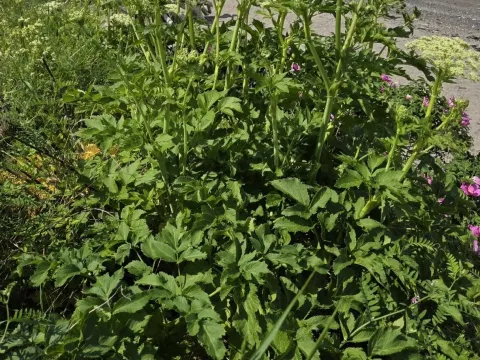
Seawatch
Angelica lucida
Seawatch, a member of the Apiaceae family, is typically propagated via seeds sown in autumn to allow for natural cold stratification over the winter.
What the section contains
Seawatch
For spring sowing, seeds must be stratified in a refrigerator at temperatures between 1°C and 5°C for several weeks to break dormancy effectively.
Seeds should be sown at a shallow depth of approximately 1 cm in well-prepared soil, ensuring they remain moist until germination occurs.
The optimal spacing for this crop is 60–70 cm between rows, which accommodates the plant's expansive foliage as it matures into its second year.
Regular weeding during the first few months is essential, as the seedlings are relatively slow-growing and can be easily overwhelmed by vigorous weeds.
The plant thrives in moist, fertile, loamy soils that possess a high level of organic matter and good water-retention capabilities.
While seawatch adapts well to sunny locations, it performs exceptionally well in partial shade, especially in warmer climates where it avoids heat stress.
As a resilient perennial, it is highly tolerant of cold temperatures, making it a reliable choice for cultivation in northern temperate regions.
Consistent soil moisture is crucial for optimal development, although the soil must be well-drained to prevent root rot in heavier soil types.
Incorporating compost or well-rotted manure during site preparation provides the necessary nutrients for the plant to achieve vigorous vegetative growth.
Like many members of the carrot family, seawatch is susceptible to aphid infestations, which can sap the vitality of the plant's young shoots.
Powdery mildew and various fungal leaf spots may appear during periods of high humidity, necessitating proper spacing to ensure adequate airflow.
Root rot remains a significant threat if the soil remains waterlogged for extended periods, particularly in the early spring or late autumn.
Implementing a strict crop rotation schedule prevents the buildup of soil-borne pathogens and helps maintain the overall health of the plantation.
Using integrated pest management practices helps to keep pest populations at bay while preserving the balance of beneficial insects in the field.
The primary harvest for the roots of Angelica lucida is scheduled for the autumn of the second year, once the plant has reached peak maturity.
Careful excavation is required to ensure that the primary root system remains intact, as this contains the majority of the plant's valuable compounds.
After harvesting, the roots must be thoroughly cleaned of soil debris and sliced into sections to facilitate uniform drying in a controlled environment.
Drying is best achieved in well-ventilated sheds at temperatures below 45°C to avoid degrading the aromatic oils contained within the tissues.
Properly dried material should be stored in moisture-proof containers in a cool, dark environment to ensure longevity and preserve quality.