
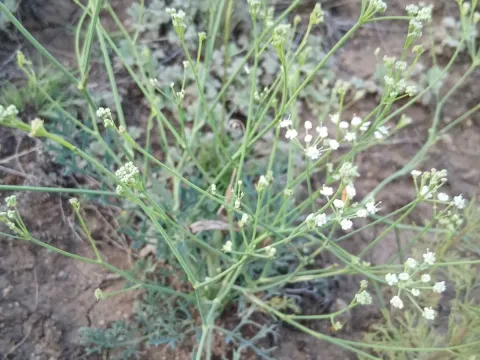
Saposhnikovia divaricata
Saposhnikovia divaricata
Sowing of Saposhnikovia divaricata is recommended in late autumn or early spring following a necessary period of seed stratification. Autumn sowing allows seeds to undergo natural winter hardening, which improves germination rates.
What the section contains
Saposhnikovia divaricata
For spring planting, seeds must be kept in a moist environment at low temperatures for 30–45 days. This biological requirement is essential to break seed dormancy and ensure uniform growth.
An optimal planting layout involves row spacing of 45–60 cm, providing adequate space for the development of the primary taproot. Seeds should be planted at a shallow depth of 1–2 cm.
To improve initial establishment, the soil should be lightly compacted after sowing and covered with a thin layer of organic mulch. Seedlings emerge slowly, requiring consistent soil moisture during the first few weeks.
As a perennial crop, initial planning of the plot is crucial for long-term production. During the first year, the plant focuses exclusively on establishing a leaf rosette and a robust root system.
The plant belongs to the Apiaceae family and thrives in specific soil conditions. It prefers deep, loose sandy loam or light loam soils with a neutral to slightly alkaline pH.
Saposhnikovia divaricata is highly sensitive to waterlogging; therefore, poorly drained fields are unsuitable. Excellent soil drainage is the most critical factor to prevent root rot in this species.
It is a sun-loving plant that requires open, sunny locations without shade from surrounding vegetation. High light intensity is directly linked to the accumulation of medicinal compounds in the roots.
The plant is known for its high cold tolerance and can survive harsh winter conditions. However, it is vulnerable to damage during frequent freeze-thaw cycles without consistent snow cover.
Moderate watering is required during the first half of the growing season. Excess nitrogen fertilizer should be avoided as it can degrade the quality of the harvested root and promote excessive foliage at the expense of root development.
The commercial value of this crop lies in its root, which is harvested at the end of the third growing season. Harvesting too early results in a low concentration of active chemical constituents.
In professional farming, the yield of dried roots typically ranges from 1.5 to 3 tons per hectare, depending on soil fertility and the implementation of proper cultivation techniques.
The active substances, including chromones and coumarins, reach their peak concentration by the autumn of the third year. Timely harvest is essential to meet pharmaceutical standards.
Weed management during the first two years is vital for high yields. Weeds compete with the developing roots, significantly slowing down the plant's growth and reducing the root's diameter.
Following harvest, the roots undergo thorough cleaning, washing, and controlled drying at temperatures below 50 degrees Celsius. Proper drying techniques ensure the retention of medicinal properties.
The primary threat to the crop is root rot caused by excessive soil moisture and poor drainage. This condition can lead to rapid and total loss of the planting if not managed.
Pests such as the parsnip webworm and aphids can damage the foliage and flowering stems during the summer. Biological control measures are preferred over broad-spectrum synthetic pesticides.
Wireworms represent a significant threat to young roots, as their feeding creates wounds that serve as entry points for pathogens. Crop rotation is the best preventative strategy against these pests.
Powdery mildew may occur under conditions of high humidity and poor air circulation. Proper spacing between rows is necessary to prevent the spread of fungal diseases through the field.
Regular monitoring of the plant canopy allows for the early detection of disease outbreaks. Ensuring high-quality, disease-free seed stock is the foundation of a healthy Saposhnikovia plantation.
Harvesting is carried out in late autumn when the aerial parts of the plant have withered and died back. At this stage, the root is at its peak weight and active substance content.
Specialized equipment, such as deep-digging ploughs, is used to extract roots at a depth of 30–40 cm without causing physical damage. Mechanization minimizes labor costs and root loss.
After extraction, roots must be cleared of soil and trimmed of all leaf bases. Proper post-harvest handling ensures that the roots remain clean and intact before the drying process begins.
Roots are sorted by size and thickness to meet quality standards. High-quality roots are characterized by a firm texture, a specific color, and the absence of insect damage or rot.
Stored dried roots require a cool, dry environment protected from rodents and warehouse pests. Proper storage conditions maintain the shelf life and potency of the medicinal product.