
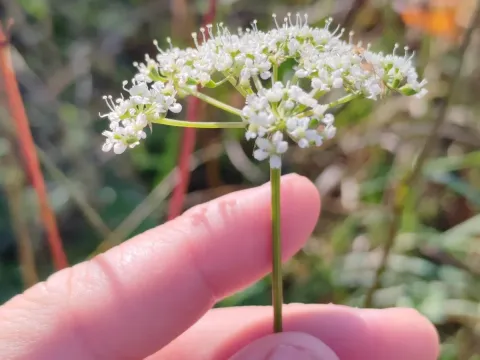
Venetian peucedanum
Peucedanum venetum
Venetian Peucedanum (Peucedanum venetum) is a perennial herbaceous plant belonging to the Apiaceae family. It is a crop of significant interest in herbal medicine due to its unique chemical profile, which requires specific knowledge for successful cultivation.
What the section contains
Venetian peucedanum
Propagation is primarily achieved through seeds. Since seeds have a dormant phase, they often require cold stratification for 4 to 6 weeks. Sowing is most effective in late autumn, allowing the seeds to undergo natural stratification during the winter season.
When sowing in the spring, it is essential to ensure that the seed material has been pre-chilled under controlled conditions. This step is critical to achieve uniform germination and ensure a high plant density in the field.
Seeds should be sown at a shallow depth of 1.5 to 2 centimeters. Over-burying the seeds can lead to poor emergence rates, as the small embryos lack the energy to push through a thick layer of heavy soil.
For commercial production, a spacing of 50 centimeters between rows is recommended. This allows for adequate root development and provides sufficient space for machinery or manual maintenance during the growing season.
The Venetian Peucedanum is relatively hardy, yet it thrives best in deep, well-drained loamy soils. It is highly sensitive to waterlogging, so choosing a site with excellent natural drainage is a fundamental requirement for the crop's health.
The plant prefers sunny locations. While it can survive in partial shade, exposure to direct sunlight significantly improves the production of secondary metabolites in the roots, which are the main harvestable part of the plant.
Soil pH should ideally be neutral or slightly alkaline. If the soil is overly acidic, incorporating agricultural lime prior to planting can improve nutrient availability and support robust vegetative growth.
Water requirements are moderate. During the establishment phase in the first year, regular watering is necessary. Once established, the deep taproot allows the plant to access subsoil moisture, making it moderately drought-tolerant.
General maintenance includes keeping the field free of weeds. Young plants are poor competitors, so mechanical weeding or mulching is highly beneficial to prevent weeds from suppressing the growth of the crop.
The yield of Venetian Peucedanum is measured by the biomass of its roots and the quantity of harvested seeds. Productivity is closely linked to the age of the plantation, with the best quality typically achieved by the third year of growth.
The chemical concentration of the active ingredients within the roots reaches its peak just before the onset of the winter dormancy period. This timing is the gold standard for high-value agricultural production.
Yields can be improved by targeted application of balanced fertilizers. While the plant is not overly demanding, a moderate supply of phosphorus and potassium during the second growing season significantly bolsters root development.
Sustainable production involves rotational cropping. It is recommended not to replant Venetian Peucedanum on the same site for several years to prevent the build-up of soil-borne pathogens that thrive in the Apiaceae family.
Monitoring the harvest cycle is essential. By tracking individual plant development, growers can optimize the harvest timing to maximize both the weight of the raw material and the concentration of pharmacologically active compounds.
Like many members of the Apiaceae family, Venetian Peucedanum is susceptible to fungal diseases such as root rot. These are primarily caused by poor soil drainage and high humidity levels around the root collar.
Aphids and various bug species can become a nuisance, especially during the spring growth flush. These pests suck the sap from the succulent leaves and stems, which can stunt development and spread secondary plant viruses.
Mildew may occur during periods of high humidity and poor air circulation. Proper row spacing and thinning of overly dense stands are effective preventative measures against such outbreaks.
Soil-dwelling nematodes can cause damage to the taproots, potentially reducing the overall quality of the harvested product. Using clean, certified seed stock and maintaining strict field hygiene are the best strategies for mitigation.
Regular inspection of the crop during the early growing stages is vital for early detection of pest and disease problems. Integrated pest management practices, including beneficial insect habitats, can significantly reduce chemical reliance.
Harvesting usually takes place in late autumn when the foliage starts to die back. At this point, the plant directs all its energy into the root system, resulting in higher quality and more potent herbal material.
The roots are carefully extracted from the soil, cleaned of debris, and washed thoroughly. Quick processing after harvest is essential to prevent the degradation of heat-sensitive compounds within the plant tissues.
Drying must be conducted in well-ventilated, dry areas or specialized climate-controlled drying chambers. The temperature must not exceed 45 degrees Celsius to preserve the essential oil composition and medicinal properties.
Once dried to the correct moisture level, the material should be sorted, packed in moisture-proof containers, and stored in a cool, dark place to maintain shelf life and prevent quality loss.
Quality control standards are imperative when bringing the product to market. Consistent results in color, smell, and chemical purity reflect the grower's dedication to correct post-harvest technology and storage conditions.