
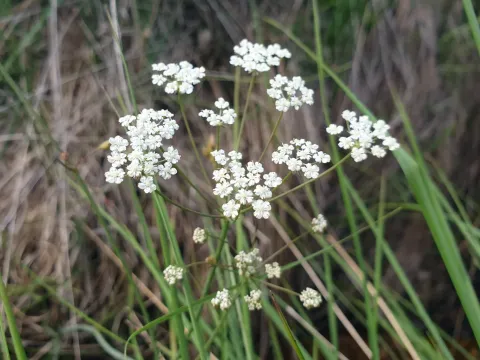
Whorled caraway
Carum verticillatum
Whorled caraway (Carum verticillatum) belongs to the Apiaceae family. It is a perennial herbaceous plant that requires specific environmental conditions for seed germination and root system establishment.
What the section contains
Whorled caraway
In temperate climates, sowing is recommended for autumn or early spring once the soil temperature is consistently above freezing. Seeds often require stratification, making late-autumn sowing effective for achieving uniform germination.
The seeds should be sown at a depth of 1-1.5 cm. Adequate soil moisture during the first weeks post-sowing is crucial, as the seedlings are sensitive to surface desiccation.
The planting pattern must accommodate the leaf rosette growth. An optimal distance between rows is 30-40 cm, with 15-20 cm between plants to ensure proper aeration.
As a perennial species, the plant focuses its energy on developing a strong taproot and a rosette of basal leaves during its first year of growth.
Whorled caraway prefers the moist, cool climatic conditions typical of Atlantic European regions. Its natural range is concentrated primarily in western parts of the continent.
Successful growth requires moderately acidic or neutral soils. Despite a preference for moisture, the plant does not tolerate waterlogging, making proper site drainage an essential requirement.
While the plant thrives in light, it may suffer during heatwaves if soil moisture is insufficient. Partial shade in regions with intense summer sun helps maintain raw material quality.
Soils should be rich in organic matter. Applying compost or well-rotted manure in autumn before tilling provides the necessary nutrients for the upcoming growing seasons.
Protection from cold, drying winds is important, as these can desiccate the aerial parts of the plant during early spring frost events.
The economic utility of whorled caraway centers on the extraction of essential oils and aromatic raw material, although it is less widely cultivated than common caraway.
Biomass yield increases starting from the second year of vegetation. Peak yields of greenery are achieved at the beginning of mass flowering when the concentration of essential oils is at its highest.
Seed yield depends heavily on the presence of pollinators, as the species requires cross-pollination by insects. Harvesting should occur once seeds start turning brown to prevent excessive shattering.
When best agricultural practices are followed, a stable seed yield per hectare is achievable, though the crop's specific needs necessitate careful management.
Regular weeding and fertilization with phosphorus and potassium-rich nutrients help improve both the biomass yield and the plant's resistance to environmental stressors.
The primary pests affecting this crop include the parsnip webworm and aphids, which can damage flowers and young leaves, negatively impacting both aesthetics and production.
Fungal diseases pose the greatest threat, particularly powdery mildew in dense, high-humidity plantings, and grey mold, which targets the crown of the plant.
Disease control relies on strict crop rotation and avoiding over-irrigation. Removing plant debris at the end of the season is an effective preventative measure.
Biological control methods are preferred over chemical pesticides, especially if the raw material is intended for use in the food or nutraceutical industry.
If fungal infections emerge, timely application of fungicides approved for use on aromatic crops is necessary to prevent significant loss of harvest.
Harvesting for greenery should be performed just before flowering. If the target product is the seed, harvest takes place in late summer as the seeds ripen.
Cut inflorescences should be tied into bunches or spread on drying racks in a well-ventilated area, protected from direct sunlight to preserve volatile oil compounds.
After drying, the seeds are threshed and cleaned of debris, then stored in airtight containers to maintain their aroma and prevent degradation over time.
Roots may be harvested in the autumn of the second or third year, once they have reached sufficient size and stored the necessary secondary metabolites.
It is critical to finish the harvest before prolonged autumn rains, as excess moisture after cutting leads to spoilage and drastically reduces the commercial value of the crop.