
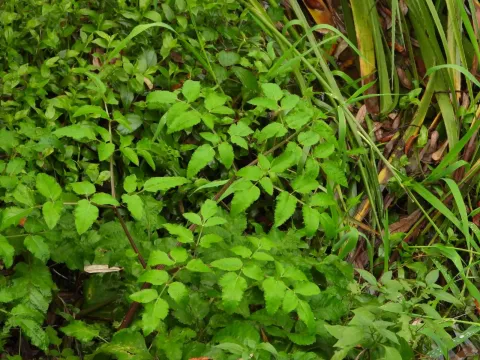
Wild angelica
Angelica sylvestris
Wild angelica (Angelica sylvestris) is a biennial or short-lived perennial belonging to the Apiaceae family. The most effective way to establish this crop is through autumn sowing, as the seeds require a period of cold stratification to break dormancy and germinate uniformly in the spring.
What the section contains
Wild angelica
When sowing in spring, seeds must be kept in moist, cold conditions for several weeks before planting. Seeds should be sown at a shallow depth of 1–2 cm, as they require a small amount of light to stimulate germination process effectively in well-drained soil.
During the first year, the plant focuses on developing a robust basal rosette of leaves and a strong taproot. Spacing is crucial for mature growth; plants should be spaced at least 45–60 cm apart to ensure adequate airflow and room for the substantial foliage.
Choose a site that mimics its natural habitat, which typically includes woodlands, damp meadows, and riparian zones. While wild angelica can tolerate full sun, it performs best in partial shade, especially in warmer climates where extreme heat might dehydrate the large leaves.
Proper crop rotation is essential. To minimize soil-borne pathogens, do not plant wild angelica in areas where other members of the Apiaceae family, such as carrots, celery, or fennel, have been grown in the previous three years.
The primary requirement for wild angelica is consistent moisture. As a plant naturally adapted to wetlands and riverbanks, it suffers significantly if the soil dries out completely during the active growing season, particularly during the flowering stage in its second year.
The soil should be rich in organic matter, deep, and fertile. It thrives in loamy soils that can retain moisture while still providing enough aeration for the root system to breathe and expand without the risk of waterlogging.
Wild angelica is remarkably cold-hardy and can withstand freezing temperatures without any special winter protection. It initiates its growth early in the spring, making it a reliable plant for gardeners in temperate regions across Europe and Asia.
Weed control is critical during the establishment phase. Because the plant grows slowly in its first year, it can easily be outcompeted by aggressive weeds. Regular hoeing and the use of organic mulch around the base of the plant help conserve moisture and suppress unwanted vegetation.
Balanced fertilization with organic compost applied in early spring can boost vegetative growth. However, avoid excessive nitrogen applications in the second year to prevent weak, brittle stems that may lodge under their own weight during windy conditions.
Fungal diseases, specifically powdery mildew and root rots, are common threats if the planting site is poorly drained. Ensuring that there is adequate space between plants to encourage air circulation is the best preventative measure against these infections.
Insects like aphids can colonize the tender young leaves and flower stalks, drawing out sap and reducing the plant's overall vigor. Minor infestations can often be managed by physical removal or the application of insecticidal soaps.
The larvae of certain moth species may occasionally feed on the leaves or bore into the stems. Regular inspection of the undersides of leaves and stem bases allows for early intervention before the damage becomes extensive enough to affect plant health.
Nematodes are another potential problem, especially in heavy or poorly managed soils. Utilizing crop rotation and maintaining high levels of organic matter in the soil helps create an environment where beneficial organisms can keep pest populations in check.
Sanitation practices are essential for managing threats. Removing dead foliage and clearing the planting area of plant debris at the end of the season reduces the number of overwintering sites for both insect pests and fungal spores.
Harvesting the leaves can be done during the first year of growth. It is important to pick only the outer leaves from the basal rosette, allowing the plant to retain sufficient foliage to continue photosynthesis and strengthen its root system for the following year.
Roots are generally harvested at the end of the second year, once the plant has finished flowering or when the plant enters dormancy in the autumn. The roots should be dug up carefully, ensuring they are not damaged or bruised during extraction.
Once harvested, the roots should be washed thoroughly to remove all soil and debris. They can then be sliced and dried in a well-ventilated, shaded area or in a dehydrator at temperatures not exceeding 45°C to preserve the aromatic essential oils.
Seed collection takes place when the flower heads turn brown and the seeds begin to dry naturally on the stem. The stalks are cut and hung upside down in a paper bag to catch the seeds as they drop, ensuring minimal loss.
Store all dried material in a cool, dark, and dry place using airtight containers. Proper storage prevents the degradation of volatile compounds and keeps the seeds viable for future propagation for up to several seasons.