
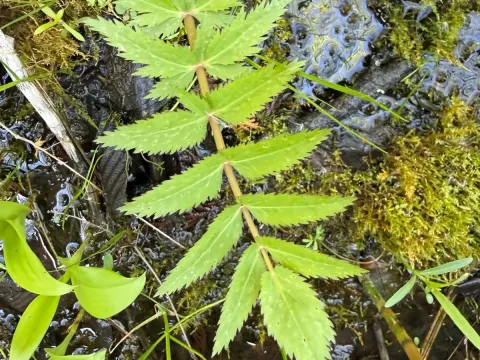
Water parsnip
Sium
Sowing seeds of Sium in nature typically occurs through self-seeding immediately after maturation in late summer. In cultivation, winter sowing in moist soil is preferred, as the seeds require a period of stratification to germinate successfully in the spring.
What the section contains


Water parsnip
If sowing is conducted in spring, seeds must be subjected to artificial cold treatment to mimic winter conditions. They are sown in trays or directly into moist soil in well-lit areas with consistent access to water.
Depth of sowing is a critical factor since the seeds are tiny; they should be lightly covered with a thin layer of fine substrate or sand. Constant moisture is essential until the first true leaves emerge.
The plant also propagates effectively through vegetative division of the rhizomes during the spring season. This method allows for faster establishment of the crop in its aquatic habitat.
Optimal planting density is approximately 5-8 plants per square meter to ensure sufficient space for the root system to expand within the water-saturated soil.
Water parsnip (Sium), a member of the Apiaceae family, is a true hydrophyte. The primary requirement for its successful development is consistent water saturation or growth directly within an aquatic environment.
The plant thrives in fertile, silty, or peaty soils with a neutral or slightly acidic pH level. Drying out of the substrate is detrimental and can lead to rapid wilting and plant mortality.
Proper light is essential for growth; however, Sium can tolerate partial shade provided by other marginal vegetation. Heavy shade results in etiolated, weak shoots that lack structural integrity.
A moderate temperature range is ideal. In regions with hot summers, the presence of flowing water is recommended to help regulate the temperature of the root zone and prevent overheating.
The culture exhibits high frost resistance, allowing it to overwinter successfully even when the surface of the water body freezes, provided the rhizomes remain buried in the bottom sediment.
The biomass yield of Sium is directly correlated with the mineral content of the water and the quality of the bottom sediments. Under favorable conditions, the culture forms dense and vigorous stands.
Economic use of the plant often includes its role as a fodder source for waterfowl and the harvest of roots for pharmacological purposes, as they contain various bioactive compounds.
In specialized aquatic farming, annual yields can reach up to 15-20 tons of green matter per hectare, provided that organic matter levels in the aquatic zone are well-managed.
Productivity decreases significantly in stagnant water where organic decay products accumulate. Controlled water circulation is the best way to maintain high yields and plant vigor.
Rhizome harvest for medicinal use should be timed to the plant's second or third year of life, allowing the plant to accumulate a sufficient concentration of active chemical components.
The main threats to Sium are fungal diseases such as powdery mildew and various rusts, which thrive in conditions of high air humidity and poor ventilation or stagnant water.
Pests, particularly mollusks and specific insect larvae, can cause significant damage to the foliage, especially during the early stages of shoot development in the spring.
- Root rot caused by poor soil oxygenation in heavy mud.
- Aphids infesting the inflorescences during the flowering phase.
- Damage caused by excessive waterfowl grazing in high-density areas.
Disease management relies on the regular removal of dead organic material, which prevents the build-up of pathogens within the aquatic environment.
Chemical control is rarely appropriate in aquatic settings, so the focus remains on biological management and optimizing the environmental conditions for the plant's health.
Harvesting the green biomass for fodder should be performed at the onset of the flowering phase, when the nutritional value and concentration of essential compounds in the leaves are at their peak.
Rhizome collection is best conducted in the autumn once the aerial parts of the plant have begun to senesce, ensuring that energy reserves are concentrated in the underground organs.
Harvesting requires manual care or the use of light equipment to avoid disturbing the bottom sediments, thus preserving the local aquatic ecosystem for future regrowth.
Collected material must be thoroughly rinsed to remove mud and dried in a well-ventilated, shaded area to preserve the plant's texture and natural properties.
After harvesting, simple aeration of the bottom soil can stimulate oxygen availability for the remaining rhizomes, promoting better overwintering and faster spring regeneration.