
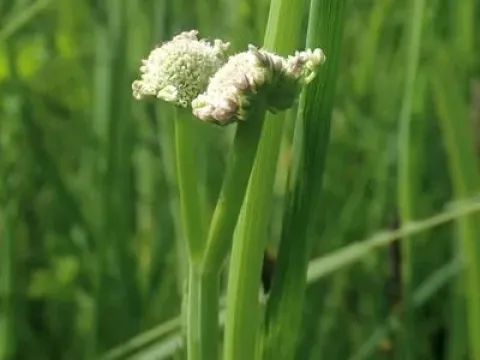
Tubular water-dropwort
Oenanthe fistulosa
Tubular water-dropwort (Oenanthe fistulosa) is a perennial herbaceous plant belonging to the Apiaceae family. It is a specialized species that thrives in damp, wetland environments, often found near pond edges or in seasonally flooded grasslands.
What the section contains
Tubular water-dropwort
The distribution range of this species covers much of Europe, extending into Western Asia and Northern Africa. It is adapted to aquatic and semi-aquatic habitats, playing a specific role in the hydrological dynamics of meadows and wetlands.
Botanically, the plant is characterized by hollow, tubular stems and pinnate leaves. Its roots often exhibit tuberous swellings, which are essential for storing energy during periods of inundation, allowing the plant to persist in anaerobic soil conditions.
Regarding soil and climate, the species requires fertile, moisture-retentive soils, typically silt or heavy loam. It is highly sensitive to drought and requires a consistent water supply to remain productive throughout the growing season.
From an agricultural standpoint, it is rarely cultivated intentionally due to the presence of toxic polyacetylenes. In rural areas, it is recognized primarily as a weed or an indicator of poorly drained fields where livestock grazing should be managed to avoid toxicity.
The species faces significant threats from fungal infections, particularly in stagnating water conditions. Powdery mildew can affect the leaves, especially when environmental humidity is high and airflow is restricted by dense vegetation.
Pests such as the carrot fly can target this plant, as it belongs to the same family as many common vegetables. Infestations by these insects can cause severe damage to the stem structure, weakening the plant and increasing susceptibility to secondary pathogens.
Invasive species and competitive hydrophytes often threaten the survival of water-dropwort in natural habitats. When common reed or sedges dominate the environment, they outcompete the species for nutrients and solar radiation.
Land drainage and systematic soil improvement projects represent the most direct threat to the species' existence. As wetlands are converted for intensive farming, the micro-habitats required by Oenanthe fistulosa are permanently destroyed.
Soil compaction caused by heavy grazing animals is another major concern. The physical destruction of the tuberous roots significantly reduces the plant's ability to regenerate, leading to a decline in population density over several growing seasons.