
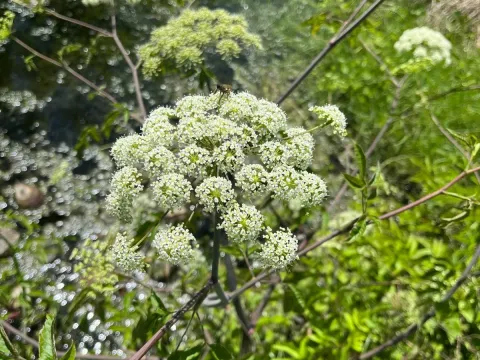
Water hemlock
Cicuta
Water hemlock (Cicuta virosa) is a perennial herbaceous plant belonging to the Apiaceae family. In agricultural terms, it is considered a dangerous weed that poses a lethal threat to livestock and has no commercial or crop value.
What the section contains


Water hemlock
The plant is native to the temperate regions of Europe and Asia. Its preferred habitat consists of wet, marshy areas including stream banks, ditches, and wetlands, where high soil moisture is consistent throughout the growing season.
Botanically, it is characterized by a thick, chambered rootstock that contains a high concentration of cicutoxin. This compound is a potent neurotoxin that affects the central nervous system, making the plant dangerous if consumed even in small quantities.
Regarding environmental requirements, Cicuta virosa thrives in damp, nutrient-rich soils. It is highly tolerant of flooding and low-light conditions, which allows it to dominate in wetland areas that are typically inaccessible to standard crop cultivation.
Agrotechnical management is strictly focused on eradication. Because the root system is the most toxic part, control efforts must ensure that the entire rhizome is removed from the soil and destroyed to prevent re-sprouting and poisoning incidents.
The primary agricultural threat is livestock poisoning. Cattle and sheep are particularly susceptible to ingestion during early spring when the plant is among the first to emerge, and its young, succulent leaves may seem palatable to grazing animals.
The plant demonstrates remarkable resilience against common pests and diseases. Its chemical composition acts as a powerful deterrent, protecting it from many insect species that typically feed on other members of the carrot family.
While standard crop diseases may occasionally affect the foliage, they do not impact the plant's population density or its survival. The plant's hardy nature makes it difficult to manage without targeted physical removal.
Management of infested areas requires
- frequent monitoring of pastures near waterways;
- mechanical excavation of the rootstock;
- burning of residues in a controlled environment;
- avoiding the grazing of infested pasture lands.
There is no chemical control widely used for Cicuta virosa, as environmental regulations often restrict the use of strong herbicides near aquatic ecosystems. Therefore, physical manual extraction remains the safest and most effective method of control.