
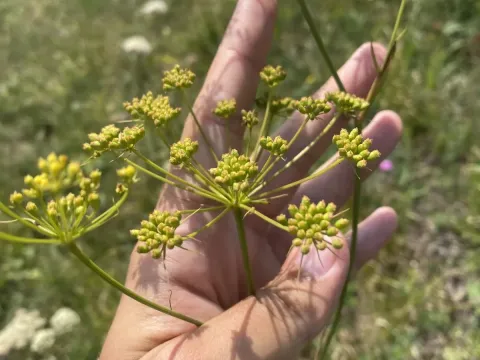
Long-leaved pepper-saxifrage
Peucedanum longifolium
Long-leaved pepper-saxifrage is a perennial species belonging to the Apiaceae family, which typically requires seed stratification to achieve high germination rates. In agricultural settings, direct sowing is most effective when performed in late autumn, allowing the seeds to undergo natural winter chilling.
What the section contains
Long-leaved pepper-saxifrage
For spring sowing, seeds must be artificially stratified at temperatures near freezing for at least 8 to 12 weeks. Proper seed bed preparation is essential, as the seeds are small and should be sown at a depth of no more than 1–2 centimeters to ensure adequate light exposure for emerging seedlings.
Optimal row spacing should be maintained between 45 and 60 centimeters to facilitate weed control and allow the plant to establish its vigorous foliage. Proper spacing also ensures that the root system has sufficient space to develop its characteristic taproot structure during the first year.
Initial seedling growth is relatively slow, making the establishment phase the most labor-intensive period regarding weeding. Once the plant has developed several true leaves, its growth rate accelerates, and it becomes more resilient to environmental competition.
Transplanting is best performed in the early seedling stage, typically after the first true leaves have fully expanded. The plant exhibits high hardiness, adapting well to new soil environments once the root system has successfully established and stabilized in the field.
The plant thrives in open, sunny locations with well-draining, nutrient-rich sandy or loamy soils. It is critical to select sites with a neutral to slightly alkaline pH, as highly acidic soils can significantly inhibit healthy biomass development.
While the species is naturally drought-tolerant due to its deep taproot, supplemental irrigation during the peak spring growth phase significantly enhances total yield. Farmers should avoid heavy, waterlogged clay soils, which promote root decay and hinder the plant's natural respiration.
Nutrient management involves applying balanced nitrogen-rich fertilizers in early spring to support leaf production. Phosphorus and potassium are best applied during autumn preparation to strengthen the roots, which improves the plant's overall longevity and quality of the medicinal harvest.
The species is well-adapted to temperate climates and requires a distinct seasonal cycle to progress through its biological growth stages. It is highly resistant to winter frosts, making it a reliable crop for regions with significant annual temperature variations.
Good soil structure is vital; therefore, incorporating organic compost before planting helps maintain moisture balance and nutrient availability. Proper field drainage systems must be operational if the chosen land is prone to seasonal water accumulation.
Like many members of the Apiaceae family, Long-leaved pepper-saxifrage is susceptible to powdery mildew and various leaf spot diseases. These are primarily managed through proper irrigation practices and by ensuring adequate spacing to promote airflow and foliage drying.
Root rot remains the most serious threat, especially if the soil is poorly drained. Crop rotation is the fundamental defense, as it prevents the buildup of soil-borne pathogens and helps maintain a healthy ecosystem for the plants over several growing seasons.
Insect pests such as the carrot rust fly can damage the root system, potentially causing yield losses. Regular monitoring for insect presence is recommended, with localized applications of approved pesticides used only when traditional biological controls are insufficient.
The umbellifer moth can also infest developing seed heads and flowers, reducing seed viability. Hand-picking or utilizing row covers during the flowering stage are effective non-chemical strategies for small-scale cultivation, whereas integrated pest management is used on larger farms.
Maintaining spatial isolation from other umbelliferous crops reduces the risk of cross-infection by viral diseases. Effective field sanitation, including the removal of infected plant debris, is crucial for preserving the long-term productivity of the plantation.
The harvest of roots is typically conducted at the end of the second or third growing season, when the plant has accumulated its maximum concentration of active biological compounds. Mechanical harvesting is common, though it requires careful adjustment to avoid damaging the roots.
For medicinal leaf or stem utilization, harvesting occurs during the active vegetative growth phase, before the plant enters its full flowering cycle. Harvested materials should be dried immediately in shaded, well-ventilated areas to prevent essential oil loss and fungal spoilage.
Seed harvesting requires careful timing, as the seeds ripen unevenly across the umbel. It is standard practice to harvest the clusters just before full maturity, allowing them to dry in climate-controlled conditions to ensure high germination rates for future planting.
Post-harvest handling is critical for maintaining product purity, especially for pharmaceutical or market use. Roots should be gently cleaned of soil and moisture to prevent deterioration while being stored in cool, dry environments with constant air circulation.
Dried products must be protected from direct sunlight and humidity to preserve their therapeutic potency for several years. Proper storage protocols, including the use of breathable packaging, ensure the longevity and high quality of the final agricultural output.