
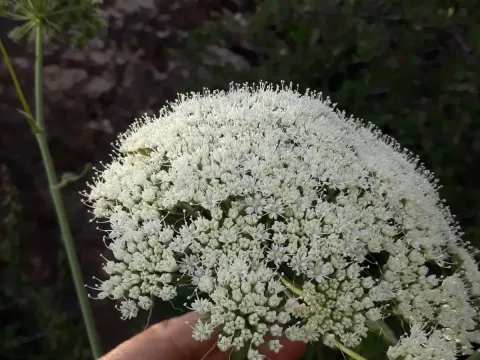
Magydaris
Magydaris
Magydaris is a genus of perennial herbaceous plants belonging to the Apiaceae family. While not a mainstream commodity crop, it possesses significant potential as a specialty plant due to its unique chemical profile, which is highly valued in the production of essential oils and botanical extracts.
What the section contains


Magydaris
The natural habitat of the plant is centered around the Mediterranean Basin, where it thrives in rocky soils and dry meadows. Agriculturally, the plant requires well-drained, lime-rich substrates to mirror its native environment and prevent physiological stress caused by water saturation.
Botanically, Magydaris is characterized by a strong taproot system, which allows it to access deep soil moisture, and complex umbelliferous inflorescences. The foliage is typically dissected, reflecting an evolutionary adaptation to arid conditions, allowing the plant to minimize water loss while maximizing photosynthetic efficiency.
In terms of climatic requirements, the plant prefers warm environments with a long growing season. It exhibits high resilience to heat and moderate drought, making it suitable for cultivation in regions with dry summers, provided that soil aeration is maintained to support healthy root development.
The primary economic interest lies in the harvest of its seeds and leaves for the pharmaceutical and cosmetic industries. Ongoing research into the terpene composition of Magydaris highlights its status as an emerging crop with specific functional properties that require precise management techniques.
The primary threats to Magydaris cultivation are fungal pathogens, specifically those triggered by poor drainage or excessive humidity. Root rot and powdery mildew are the most common issues, necessitating careful irrigation management and ensuring adequate airflow between rows to mitigate disease pressure.
Pests typical of the Apiaceae family, such as umbellifer moths and aphids, can significantly impact yield. These insects often target the developing flower heads, which directly reduces seed production and lowers the overall market value of the harvested raw material.
Effective management strategy focuses on crop rotation and spatial isolation from wild related species to prevent the transmission of viral diseases. Maintaining soil health through mechanical weeding is crucial, as Magydaris is sensitive to weed competition, particularly during the early stages of establishment.
Integrated Pest Management (IPM) protocols are highly recommended, prioritizing the use of biological control agents over synthetic pesticides. This approach is essential for maintaining the purity of the crop, especially when the final product is intended for medicinal applications where residue levels are strictly regulated.
Regular field scouting is vital to detect early signs of infestation or fungal infection. By identifying threats at an early stage, growers can employ localized treatments, thereby minimizing the cost of inputs and protecting the long-term ecological balance of the cultivated field.