
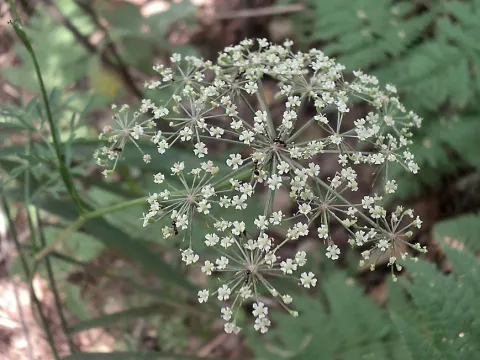
Marsh parsley
Peucedanum palustre
Marsh parsley (Peucedanum palustre) is a biennial or short-lived perennial herb belonging to the Apiaceae family. In agricultural practices, seeds are the primary method of propagation, although they require specific environmental conditions to germinate effectively.
What the section contains
Marsh parsley
Fresh seeds exhibit dormancy and often require a period of cold stratification for 60 to 90 days. Sowing is typically performed in late autumn, allowing the natural winter cycle to break seed dormancy and encourage uniform emergence in spring.
The sowing depth should be shallow, generally between 0.5 and 1 centimeter. The seedbed must be kept consistently moist throughout the germination phase, as the seeds are prone to drying out, which can permanently impair their viability.
For vegetative propagation, mature rhizomes can be divided in early spring just before active growth begins. The sections should be planted immediately into rich, moist soil to prevent them from desiccating before root establishment occurs.
Optimal plant spacing is crucial for canopy management. Planting rows should be spaced at least 45 centimeters apart to allow for airflow and to prevent the buildup of humidity, which can lead to fungal issues.
As the common name implies, this species is highly adapted to wetland environments. It thrives in soils that are consistently saturated or have a high water table, making it suitable for damp meadows, marshes, and river floodplains.
The preferred soil type is rich in organic matter, particularly peat-based or heavy silty loams. While it tolerates a wide range of moisture levels, it is not drought-tolerant and will quickly decline if the root zone dries out significantly.
Marsh parsley prefers full sun exposure to maximize the synthesis of essential oils and other secondary metabolites within its tissues. While it can survive in partial shade, such conditions often result in etiolated growth and reduced overall plant vigor.
Temperature requirements are moderate, with the plant showing remarkable hardiness against winter cold. It is well-adapted to temperate climates, successfully overwintering in regions where temperatures drop well below freezing.
Agricultural management requires careful attention to weed control, especially during the establishment year. Because the plants grow slowly initially, they can be easily outcompeted by more aggressive invasive weeds in wet habitats.
Fungal diseases represent the most significant threat to Peucedanum palustre, especially in high-humidity cultivation settings. Powdery mildew and various leaf spot pathogens can rapidly defoliate plants if proper ventilation is not maintained.
Insect pests, particularly aphids, frequently target the succulent stems and leaves, extracting plant sap and potentially transmitting viral diseases. Early detection and the use of integrated pest management are highly recommended.
Root rot caused by Oomycetes and other soil-borne fungi is a common problem in poorly drained substrates. Ensuring that water moves through the root zone without stagnating is essential for preventing root death.
Larvae of certain butterflies and moths may feed on the foliage during the growing season. While usually not catastrophic, significant infestations can weaken young plants and reduce the harvestable biomass of medicinal parts.
Regular sanitation, including the removal of dead or dying plant debris from the field, is an effective way to lower the pathogen load and prevent the overwintering of fungal spores in the soil.