
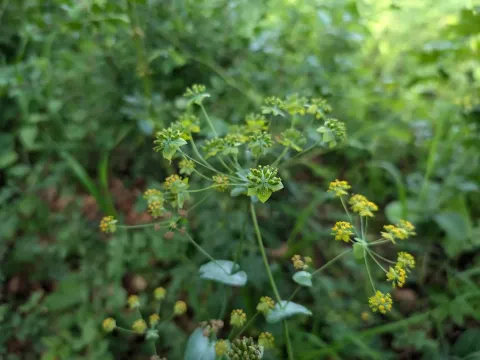
Long-leaved hare's ear
Bupleurum longifolium
Bupleurum longifolium is a perennial herb of the Apiaceae family. Due to seed dormancy, the most effective method for planting is late autumn sowing, which provides the necessary stratification for uniform germination in spring.
What the section contains
Long-leaved hare's ear
For spring planting, seeds must undergo cold stratification for at least 8 weeks. Sowing depth should be 1–2 centimeters, ensuring seeds are covered with enough soil to maintain moisture without hindering emergence.
Field layouts should use wide-row spacing of 50–60 centimeters. This allows for better weed control and creates a favorable microclimate for the plants to develop their root systems during the first year.
The plant demonstrates slow growth during its first season, primarily forming a basal rosette of leaves. Weed management is critical in this stage to prevent the crop from being outcompeted by aggressive weeds.
Optimal germination starts when soil temperatures reach 5–10 degrees Celsius, making early spring an ideal time to check moisture levels in the seedbed to support the establishment of young seedlings.
This crop thrives in sunny locations but adapts well to semi-shaded environments. It prefers fertile, well-drained loamy soils with a neutral or slightly acidic pH balance to reach its full vegetative potential.
The species is highly frost-hardy, having evolved in temperate and mountain regions, allowing it to withstand severe winter conditions without special protection, provided the soil is not waterlogged.
Soil moisture regulation is essential. The plant does not tolerate standing water, which causes root decay. Adequate drainage is the most important factor in site selection for commercial production.
The ideal temperature for vegetative development ranges between 16 and 22 degrees Celsius. Extreme summer heat can trigger premature flowering, which diverts energy away from leaf production.
Agronomic maintenance includes regular inter-row cultivation to improve soil aeration and weed control. This also encourages deep root growth, which helps the plant survive occasional dry spells during the summer.
Yields peak starting from the third year of cultivation when the plants have established a massive perennial root system and reached their full reproductive capacity for herbal biomass.
Expect an average yield of approximately 15–25 centners of dry herbal material per hectare, depending on soil quality and the efficiency of the fertilization program used in the production plan.
Supplementing with phosphorus and potassium fertilizers during the growing season significantly increases biomass production and helps improve the concentration of vital saponins and flavonoids in the harvest.
A well-managed plantation remains productive for 5–7 years before yields begin to decline, at which point the field should be rotated to prevent soil fatigue and disease buildup.
The economic value of this crop is primarily found in the pharmaceutical industry, where its extracts are used to formulate liver-protecting medicines and anti-inflammatory herbal supplements.
While generally robust, the plant is susceptible to fungal diseases like powdery mildew in humid, stagnant air conditions. Good spacing and airflow are the primary methods of preventing such infections.
Pests such as aphids and true bugs can damage the developing stems and floral buds. Monitoring the plantation for early signs of insect activity is vital for protecting the marketable parts of the plant.
Root rot is the most serious threat, typically resulting from poor site selection or over-irrigation. Ensuring the soil structure remains loose and well-drained is the best preventive measure.
In cases of heavy infestation, integrated pest management practices should be followed, prioritizing organic or low-toxicity biological agents to maintain the medicinal quality of the harvest.
- Prevention: Maintain proper row spacing for airflow.
- Treatment: Use biological fungicides if signs of mold appear.
- Maintenance: Regularly weed the area to prevent pest shelters.
Harvesting is timed to coincide with the peak flowering period, when the levels of active pharmaceutical compounds are highest in the leaves and stems of the plant.
Stems should be cut at a height of 10–15 centimeters from the ground. This allows the plants to regenerate and recover effectively for the following growing season.
Post-harvest management involves immediate transport to drying facilities. Preventing self-heating and oxidative degradation is crucial for maintaining the plant's medicinal value.
Drying should take place in well-ventilated areas at temperatures not exceeding 45 degrees Celsius to preserve the essential chemical compounds and the natural green color of the raw material.
Once dried, the herbs are packaged and stored in dry, dark, and cool warehouses, where they remain stable for up to two years before being processed for pharmaceutical use.