
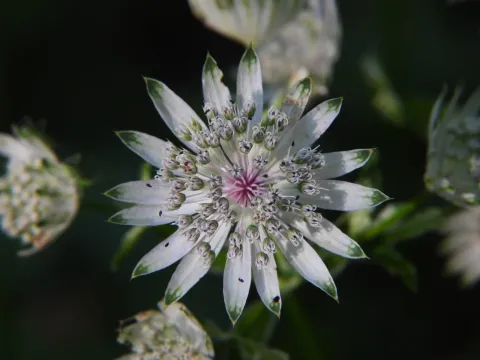
Masterwort
Astrantia L.
Sowing Astrantia seeds is best done in late autumn or early winter in open ground, as the seeds require a prolonged period of cold stratification to germinate.
What the section contains


Masterwort
If seeds are sown in the spring, they must be pre-stratified in a refrigerator for at least a month, keeping them in a moist medium at temperatures around +4 degrees Celsius.
When sowing in trays, seeds should be spread over the surface of a nutrient-rich substrate and lightly covered with a thin layer of vermiculite or light soil.
Seedlings usually emerge within 3 to 4 weeks under favorable conditions, at which point they should be pricked out into individual pots once the first true leaves appear.
Transplanting into the permanent garden site is carried out in late spring or early summer, ensuring a spacing of 30 to 40 centimeters between plants.
Astrantia belongs to the Apiaceae family and is a rhizomatous herbaceous perennial originating from the mountain meadows of Europe and the Caucasus.
The plant thrives in partial shade, although it can grow in sunny spots provided the soil is kept consistently moist and protected from drying out.
The soil must be fertile, well-draining, and rich in organic matter, as Astrantia is highly sensitive to drought and will quickly wilt under moisture stress.
This crop is exceptionally hardy and does not require winter protection in temperate climates, effectively surviving deep freezes with its rhizomes.
General maintenance involves applying organic mulch around the root zone to conserve moisture and suppress weeds, alongside moderate fertilization in early spring.
Common pests affecting Masterwort include aphids and slugs, which can damage the tender foliage and flower stems, especially during periods of wet weather.
Powdery mildew is the most frequent fungal disease, often triggered by poor air circulation due to overcrowded planting or excessive canopy density.
Preventative measures include regular division of the clumps and avoiding excessive nitrogen fertilization in late summer to ensure plant tissue matures properly.
In case of pest infestations, systemic insecticides should be used, while fungal outbreaks require treatment with broad-spectrum fungicides.
Frequent monitoring of the plant foliage and manual removal of dead or infected parts significantly reduce the risk of disease propagation.
Harvesting Astrantia for floral arrangements should be done when the flower heads are fully opened to maximize their aesthetic appeal and vase life.
The plant is highly valued by florists for its unique pincushion-like inflorescences, which maintain their structure well in fresh bouquets and dried compositions.
For drying purposes, stems should be cut and hung upside down in a dark, well-ventilated room until the moisture in the tissues has completely evaporated.
When harvesting seeds, the flower stalks should be left on the plant until they turn brown, after which they are collected and left to ripen in a dry environment.
Beyond its ornamental use, Astrantia is recognized as a productive honey plant, attracting a diverse range of pollinators and beneficial insects to the garden.