
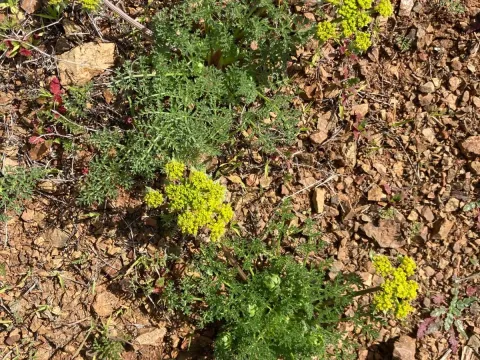
Lomatium
Lomatium
Lomatium seeds have a distinct dormancy period, requiring cold stratification for successful germination. Under natural conditions, seeds drop in late summer and germinate in the spring after winter exposure.
What the section contains


Lomatium
When cultivating, seeds should be sown in late autumn directly into open ground or containers left outdoors. This mimics the natural cycle and ensures uniform sprouting at the start of the spring season.
The sowing depth should be minimal, approximately 0.5–1 cm. Excessive depth often results in poor emergence due to the low energy reserves within the seed.
The soil at the sowing site must be well-drained to prevent seed rot during the snowmelt period. It is recommended to use a mixture of sand and fertile substrate to improve aeration.
Lomatium seedlings develop slowly during their first year of life, forming only a small rosette of leaves. It is critical to provide protection from weeds during these initial growth stages.
Lomatium belongs to the Apiaceae family and is native primarily to western North America. It is a perennial herbaceous plant adapted to life in prairie habitats and rocky foothills.
The plant is highly demanding regarding drainage quality. Standing water in the root zone is fatal, making slopes or areas with high gravel content in the soil ideal for cultivation.
The crop prefers sunny locations with good light exposure. In shaded conditions, the plants become elongated and weak, significantly reducing the concentration of bioactive compounds in the roots.
Lomatium is not overly sensitive to soil pH, but it performs best in neutral to slightly alkaline soils. An excess of organic fertilizers can be detrimental, promoting excessive foliage growth at the expense of root development.
Drought tolerance is a key feature of Lomatium. Thanks to its robust taproot system, it successfully thrives in water-deficient conditions typical of arid zones.
The main threats to Lomatium include fungal diseases caused by excessive moisture, such as root rot. Ensuring proper drainage is the most effective preventative measure against these pathogens.
Occasionally, plants may be susceptible to infestations by aphids or spider mites, especially if they are weakened by improper growing conditions or environmental stress.
In humid climates, powdery mildew can affect the foliage, although it is less common in the plant's native, dry habitat. Maintaining adequate air circulation between plants helps minimize this risk.
Vertebrates, such as ground squirrels or voles, may occasionally target the fleshy roots, particularly in younger plantations where the soil is loose.
Integrated pest management strategies focusing on site selection and moisture control are sufficient for most commercial or home garden plantings of this species.
Harvesting Lomatium roots should be conducted no earlier than the third or fourth year of vegetation. By this time, the root reaches its optimal size and has accumulated the necessary secondary metabolites.
The harvesting process should be planned during the autumn dormancy phase, when the aerial part of the plant begins to wither. At this stage, nutrients are maximally concentrated in the rhizome.
Extracting the roots requires caution, as they are quite fragile. It is recommended to use garden forks to avoid damaging the main taproot, which is highly valued for its pharmacological properties.
After harvest, the roots must be thoroughly cleaned of soil residues, washed, and dried at moderate temperatures. Overheating the raw material can lead to the loss of valuable essential oils.
Storage of the dried material should be done in airtight containers in a cool, dark place. Properly dried roots maintain their potency for an extended period.