
Ferula foetida
Ferula foetida
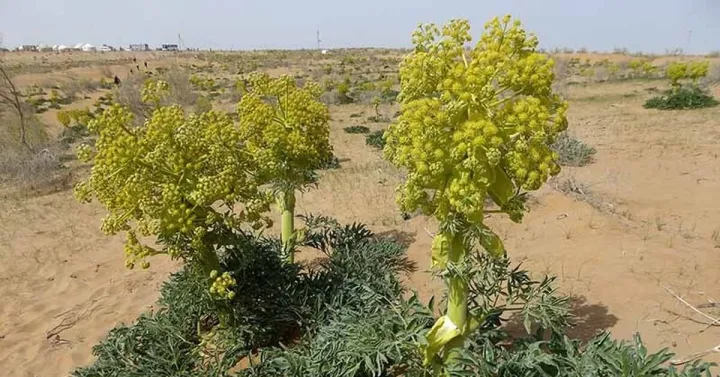
Description
Sowing dates
Ferula foetida is a perennial monocarpic herb, which dictates a very specific approach to sowing. Seeds require cold stratification, meaning they must be sown in late autumn to experience the winter frost necessary for spring germination.
The sowing depth is typically shallow, around 2 to 3 centimeters, in well-prepared, loose soil. Providing a consistent seed-to-soil contact is essential for preventing the seeds from drying out during the winter months.
Spring sowing is generally discouraged as it often leads to low and irregular germination rates. The natural cooling cycle provided by the soil during winter is the most effective way to break dormancy.
Clearance of perennial weeds is critical before sowing, as the young Ferula plants have a slow growth rate in their first year and can easily be outcompeted by more aggressive flora.
Spacing is a vital consideration for commercial plantations. A row spacing of at least 60 to 80 centimeters is recommended to allow each plant sufficient room for its long-term development.
Growing requirements
The plant thrives in arid and semi-arid environments, preferring open spaces with intense sunlight. It is highly adapted to regions characterized by sharp temperature fluctuations and low annual rainfall.
Soil requirements are strict: the crop demands light, sandy, or loamy soil with excellent drainage. Any water accumulation in the root zone is likely to cause rot and significantly impact the health of the plant.
Ferula foetida is exceptionally drought-tolerant once established, thanks to its deep-reaching taproot. Farmers must avoid over-irrigation, as the plant is evolved to extract moisture from deep soil layers.
The ideal soil pH is neutral or slightly alkaline, reflecting the common composition of soils in its natural range. Maintaining this balance is important for the plant's metabolic processes that lead to resin production.
The climate must allow for a dry summer period, which is crucial for the maturation of the resinous substances within the roots and stems of the plant.
Yield
The economic yield of Ferula foetida is measured by the extraction of oleo-gum resin, commonly known as asafoetida. Productivity depends heavily on the maturity of the plant and the environmental conditions during its growth.
Harvesting is performed by making incisions in the root of the plant just before it enters its flowering phase. The milky sap exudes from these cuts and solidifies upon contact with the air.
As a monocarpic crop, the plant devotes its energy to flowering and seed production after the harvesting cycle, which means that the commercial life of a single plant is limited.
Strategic management of the plantation allows for maximizing the resin output per hectare. Farmers must carefully time the tapping process to ensure the highest quality and quantity of the collected resin.
The overall productivity is often linked to the density of the crop and the health of the soil. Proper attention to these factors ensures a stable supply of raw material for pharmaceutical and culinary industries.
Main diseases and pests
Ferula foetida possesses a natural defense mechanism in the form of highly volatile aromatic compounds, which repel many common pests. However, it is not immune to agricultural challenges.
Root rot remains the most significant threat, especially if the soil drainage is compromised. This is particularly problematic in years with unseasonably high rainfall or improper irrigation management.
While the plant is generally robust, aphids can occasionally infest young leaves during the early vegetative stage. Monitoring for these pests is essential to prevent stunted growth.
Nematodes in sandy soils can cause root damage, hindering the plant's ability to produce the valuable resin. Implementing crop rotation helps mitigate this risk effectively.
- Root rot caused by poor drainage or overwatering
- Aphid infestations during early development stages
- Nematode damage to the primary root system
- Powdery mildew risks in high-humidity conditions
Harvesting
Harvesting is the most labor-intensive part of the cultivation process. It requires technical precision to cut the root crown without causing the premature death of the plant before the resin is fully collected.
The solidified resin is collected multiple times throughout the season. Each collection cycle requires careful cleaning to remove soil particles and debris, ensuring the highest grade of the final product.
After collection, the resin must be dried under controlled, shaded conditions to preserve its volatile components and intense aroma. Proper storage is crucial to prevent the loss of value of the resin.
Following the conclusion of the harvest, the exhausted roots are removed from the field. Preparing the soil for the next rotation is a standard part of maintaining a productive agricultural cycle.
The success of the harvest is highly dependent on the weather; dry, clear days are ideal for the exudation and subsequent hardening of the gum-resin, ensuring minimal contamination.