
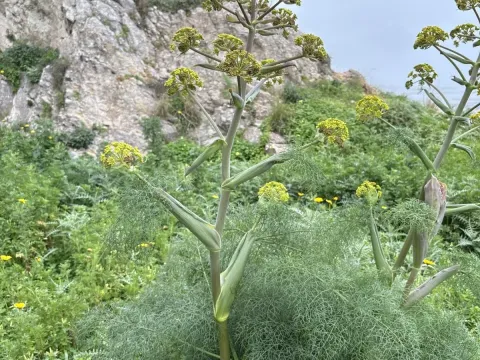
Ferula communis
Ferula communis
The sowing of Ferula communis is best performed in the autumn season, allowing seeds to undergo natural stratification, which is essential for uniform germination. Seeds should be planted at a shallow depth of approximately 1 to 2 centimeters in well-draining soil.
What the section contains
Ferula communis
In field conditions, row spacing of 50 to 70 centimeters is recommended to ensure adequate ventilation and access for mechanical weeding. The crop typically establishes a deep taproot in its first year, focusing energy away from aerial development.
Commercial production often relies on direct seeding, though transplanting established seedlings is possible if done carefully to avoid damaging the taproot. The germination period can be slow, sometimes requiring several weeks depending on moisture availability.
Adequate soil moisture is required during the initial germination phase; however, once established, the plant becomes highly drought-tolerant. Sowing density should be managed to prevent overcrowding, which can hinder the development of the root system.
Choosing the correct site is paramount, as the plant prefers open locations with full sun exposure. Proper site preparation, including weed removal before sowing, significantly improves the establishment rate of the crop.
Ferula communis, a member of the Apiaceae family, thrives in Mediterranean-type climates characterized by warm, dry summers and mild, moist winters. It is highly adapted to rocky, well-draining soils and performs poorly in heavy, waterlogged clays.
The crop is known for its remarkable resilience to drought, making it suitable for cultivation in marginal or arid landscapes. Sunlight is a critical requirement; the plant rarely achieves full maturity or flowering when grown in shaded conditions.
Soil pH preference ranges from neutral to slightly alkaline, consistent with its natural habitat. Improving soil drainage is the most critical agronomic step when managing this crop in areas with higher annual rainfall.
Regarding fertilization, moderate applications of phosphorus and potassium support root health and winter hardiness. Nitrogen should be limited, as excessive amounts can lead to overly lush foliage that is more susceptible to fungal pathogens and lodging.
The plant demonstrates significant tolerance to wind and open exposure, which is typical for its native range. Providing a stable environment with minimal root disturbance is essential for the long-term success of the plantation.
Aphids are the most frequent pests affecting the foliage and developing flower stalks, particularly during the active spring growth phase. Their feeding activity can reduce plant vigor and serve as a vector for various viral infections.
Fungal diseases, specifically root rot, occur when moisture levels exceed the plant's requirements, especially in soils with poor hydraulic conductivity. Preventive management focuses on ensuring optimal soil structure and avoiding stagnant water.
Powdery mildew may develop during periods of high humidity or poor air circulation within the canopy. Regular monitoring and thinning of overly dense stands can help mitigate the risk of spreading such infections.
Root-knot nematodes can pose a threat, particularly in sandy soils that have been continuously cropped with members of the Apiaceae family. Implementing a strict crop rotation schedule is essential to manage these soil-borne threats.
- Aphids (various species).
- Root rot (Phytophthora and Pythium species).
- Powdery mildew.
- Root-knot nematodes.