
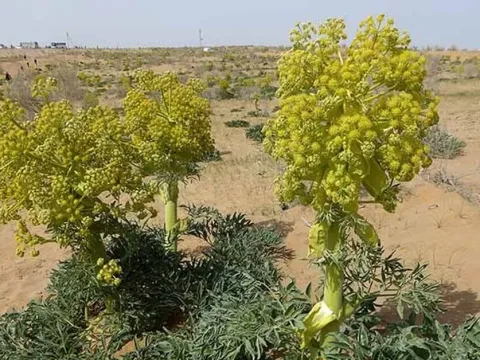
Asafoetida
Ferula assa-foetida
The cultivation of Ferula assa-foetida begins with the careful selection of seeds, which generally require a period of stratification to break dormancy and ensure uniform germination.
What the section contains
Asafoetida
Sowing is best performed in late autumn, allowing the seeds to undergo natural winter chilling in the soil, which mimics their native arid-zone environmental conditions.
Seeds are placed in well-drained, loose soil at a depth of 2-3 centimeters, with spacing between rows maintained at 60-80 centimeters to accommodate the plant's future growth.
During the first year, the plant develops a rosette of leaves and a robust taproot, focusing energy on underground growth rather than aerial biomass production.
Early-stage maintenance requires diligent weed control, as the slow-growing seedlings are easily outcompeted by aggressive weeds in their initial development phase.
As a member of the Apiaceae family, Ferula assa-foetida is a xerophytic plant perfectly adapted to the harsh, semi-desert environments of Central Asia.
The crop demands full solar exposure throughout the day; even partial shade significantly reduces resin production and plant health, negatively impacting yield.
Soil requirements focus on excellent drainage; sandy or rocky soils are ideal, as stagnant water in the root zone quickly leads to rot and plant mortality.
The plant thrives in regions with sharp temperature fluctuations between day and night, as these conditions stimulate the metabolism responsible for resin synthesis.
Minimal irrigation is required, as the plant is evolved to utilize spring moisture effectively and enter a dormant state during the hot, dry summer months.
The economic value of this crop is primarily derived from the gum resin, known as asafoetida, which is harvested from mature plants typically 5 to 6 years of age.
Yields are highly variable, depending on soil fertility, climate stability, and the specific age of the plant, usually ranging from 50 to 150 grams of resin per specimen.
Commercial harvesting is a delicate process where the crown of the root is incised to extract the milky latex, which then solidifies upon contact with the air.
Because the extraction process can be terminal for the plant, sustainable agricultural planning involves staggered planting to ensure an annual harvest rotation.
Quality control during collection is paramount, as impurities such as soil, sand, or plant debris significantly decrease the market value of the extracted gum.
Root rot caused by fungal pathogens is the primary threat to the crop, usually occurring when soil moisture levels exceed the plant's limited tolerance range.
Cutworms and other soil-borne larvae can cause severe damage by consuming the primary root during the seedling stage, leading to immediate plant loss.
Aphid infestations can occur during the flowering period, potentially reducing the plant's vitality and interfering with the accumulation of active phytochemicals.
Weed management is critical, as competing vegetation can rob the developing seedlings of vital water and nutrients in nutrient-poor desert soils.
Preventative measures include avoiding high-moisture planting sites and ensuring a strict crop rotation schedule to prevent the buildup of soil-borne pests.
Harvesting, often called "tapping," takes place during the late spring when the plant is at the peak of its vegetative activity and the resin is most abundant.
Practitioners make controlled incisions in the root collar, allowing the viscous, pungent latex to seep out and accumulate on the surface of the root.
The resin is collected once it has hardened into a solid form, usually after a few days, using scrapers that ensure the product remains clean and free of debris.
The tapped area is often protected with a covering to keep the resin clean and prevent excessive evaporation or contamination by insects or moisture.
Success in harvesting requires significant experience to determine the exact maturity of the plant and to perform incisions that maximize yield without compromising the plant's health.