
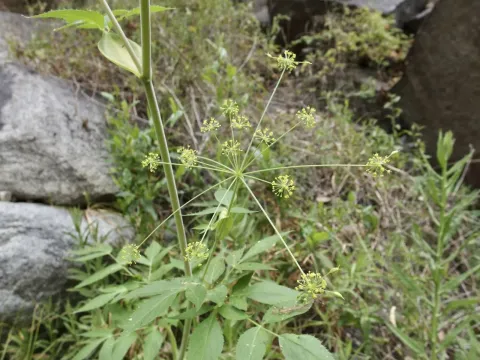
Arracacha
Arracacia
Arracacha, scientifically known as Arracacia xanthorrhiza, belongs to the Apiaceae family. It is a perennial herbaceous plant, though it is typically cultivated as an annual crop for its edible starchy roots.
What the section contains

Arracacha
In its natural Andean habitat, propagation is primarily done vegetatively using crown offsets, locally called "children." High-quality planting material is essential to ensure vigorous growth and stable yields.
Planting usually occurs at the beginning of the rainy season to provide sufficient moisture for initial establishment. Avoiding waterlogging during the first few weeks is crucial to prevent the rot of delicate cuttings.
The planting density depends on soil fertility, but a standard spacing is approximately 50–60 cm between plants. This distance provides adequate air circulation and sufficient room for the tubers to develop properly.
The plant grows relatively slowly during the early stages, making weed management essential during the first two months to ensure the crop gets off to a healthy start.
Arracacha is a typical cool-climate high-altitude crop that thrives in moderate temperatures. The optimal growth range is between 15–25 degrees Celsius, as the plant is highly sensitive to frost.
Successful tuber formation requires deep, loose, and well-drained soils. Heavy clay substrates can lead to tuber deformation and make the harvesting process significantly more difficult.
The crop has high organic matter requirements. Incorporating compost or well-rotted manure into the soil before planting is recommended to improve soil structure and provide essential macronutrients.
Maintaining consistent soil moisture is a key requirement; however, arracacha strictly avoids water stagnation, which triggers root rot. Sloping land with good natural drainage is ideal for this species.
The plant responds well to well-lit areas, although it can tolerate light shade at high altitudes. In commercial settings, adhering to crop rotation is vital to prevent the buildup of soil-borne pathogens.
The yield of arracacha depends heavily on environmental conditions and the quality of the starting material. On average, the maturation period ranges from 8 to 12 months after planting.
Each plant can produce several roots that resemble carrots in shape but possess a much more delicate, nutty flavor and a smooth texture. The skin color varies from white to cream, yellow, or even purple.
The crop has diverse culinary applications: the roots are consumed boiled, fried, or baked. They are also frequently processed into a highly digestible starch flour, which is excellent for baby food and gluten-free diets.
The leafy greens of the arracacha plant are also edible and used as an aromatic herb, similar to parsley or celery, making it a valuable resource for functional nutrition.
With optimal agronomic practices, yields can reach 10–15 tons per hectare, positioning arracacha as a promising niche crop for regions with suitable high-altitude climates.
One of the primary threats to arracacha is soil-borne pathogens, specifically fungi from the genera Fusarium and Rhizoctonia, which cause rot in the root crown and the tubers themselves.
Among pests, nematodes pose the greatest threat by damaging the root system, which reduces growth rates and significantly degrades the market quality of the harvest.
Larvae of certain soil-dwelling insects also cause damage by tunneling through the roots, creating entry points for secondary bacterial and fungal infections.
To prevent disease, it is recommended to use only disease-free planting material and to disinfect tools after each soil-handling cycle to minimize the spread of pathogens.
Important control methods include maintaining proper irrigation levels and timely hilling, which protects the tops of the tubers from overheating and pest entry.
Harvesting arracacha is a labor-intensive process because the roots are extremely brittle and prone to mechanical damage if handled aggressively.
The signal to begin harvesting is the yellowing and natural senescence of the foliage. At this point, the accumulation of nutrients in the roots has reached its peak.
Traditionally, forks or specialized digging tools are used to lift the root clump without cutting or fracturing the delicate tubers.
Immediately after harvest, the crop must be cleaned of excess soil and stored in a cool, dark place. Exposure to direct sunlight must be avoided to prevent quality degradation and skin discoloration.
Fresh roots have a relatively short shelf life, so it is highly recommended to distribute or process the product as soon as possible after harvest to maintain its high nutritional value.