
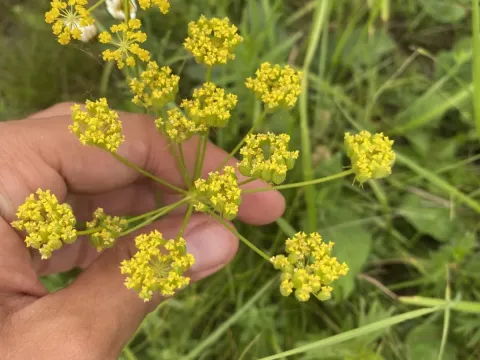
Armenian parsnip
Pastinaca armena
Armenian parsnip (Pastinaca armena) is a herbaceous plant belonging to the Apiaceae family. It is native to the mountainous regions of the Caucasus and is adapted to specific soil and climatic conditions, distinguishing it from common garden parsnips.
What the section contains
Armenian parsnip
The sowing process begins in early spring when the soil temperature consistently reaches 5-8 degrees Celsius. Direct sowing is the most effective method, as the plant does not respond well to transplanting due to its long taproot.
Seed preparation is crucial because parsnip seeds contain volatile oils that can inhibit germination. Soaking seeds in water for 24-48 hours before planting significantly improves the uniformity of germination in the field.
Seeds should be planted at a depth of 1.5 to 2 centimeters. Ensuring proper soil moisture immediately after sowing is essential, as the seeds are highly sensitive to drought during the initial imbibition phase.
Row spacing should be maintained at 40-50 centimeters, with a final plant density of about 15-20 centimeters between plants. This spacing allows for adequate airflow, which is critical for reducing the risk of fungal diseases.
Armenian parsnip requires deep, well-drained loamy or sandy soil to develop a straight and fleshy root. Heavy or compacted soils lead to deformed, branched, and low-quality roots that are difficult to harvest.
The crop is highly light-demanding. Growing it in open, sunny areas is essential for the accumulation of sugars and secondary metabolites that define its unique flavor and aroma profile.
While the plant is drought-tolerant once established, regular irrigation is necessary during the peak growth season to maintain consistent soil moisture. Inconsistent watering often leads to radial cracking of the roots.
The optimal temperature for development ranges from 15 to 22 degrees Celsius. The species exhibits high cold hardiness and can withstand freezing temperatures, allowing the roots to remain in the ground late into the season.
Fertilization should prioritize phosphorus and potassium, as excessive nitrogen application promotes rapid foliage growth at the expense of root development. Organic compost applied before winter provides the best foundation.
The most significant pest is the carrot fly (Psila rosae), which larvae feed on the roots. Integrated pest management, including crop rotation and physical barriers, is recommended to mitigate the damage.
Aphids can pose a threat during hot and dry periods, causing leaf curling and reduced photosynthesis. Monitoring the undersides of the leaves and applying appropriate horticultural soaps can help control these outbreaks.
Fungal diseases like leaf spot (Cercospora) can occur during periods of high humidity. Proper crop hygiene and ensuring sufficient distance between plants help minimize the spread of spores throughout the field.
Root rots are typically caused by poor soil drainage and waterlogging. These conditions are detrimental and can lead to the total loss of the harvest, necessitating careful site selection and field leveling.
Effective management of threats relies on preventive measures such as weed control and avoiding the excessive use of nitrogen fertilizers, which can make the plants more susceptible to pathogens.
Harvesting usually takes place in late autumn after the foliage begins to senesce. The root quality improves as temperatures drop, allowing the plant to convert starches into sugars, which enhances the final flavor.
The roots are harvested by gently lifting them from the soil, often using mechanical harvesters or garden forks to avoid skin damage. Care must be taken to minimize bruising, which creates entry points for decay.
Post-harvest handling involves removing excess soil and foliage. The roots should be allowed to air-dry in a cool, shaded area for a few hours before being stored, preventing the development of surface rot.
Long-term storage requires cool and humid conditions, typically in root cellars or refrigeration units maintained at 0-2 degrees Celsius. Proper ventilation is vital to maintain the quality of the roots during storage.
Beyond its traditional use as a staple vegetable in soups and stews, the Armenian parsnip is valued for its nutritional profile, providing fiber, vitamins, and minerals that contribute to a healthy diet.