
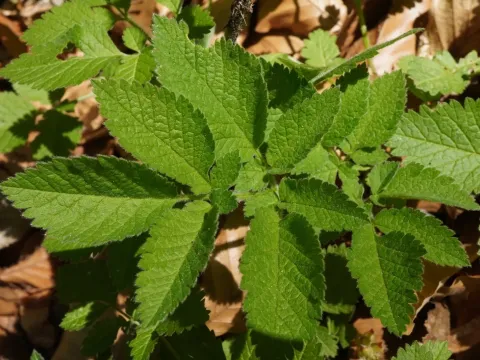
Aromatic chervil
Chaerophyllum aromaticum
Aromatic chervil seeds require a period of stratification to break dormancy; therefore, sowing in late autumn before the ground freezes is the most effective method.
What the section contains
Aromatic chervil
For spring sowing, seeds must be stratified in a refrigerator at temperatures between 2 and 5 degrees Celsius for at least six weeks to ensure uniform germination.
The seeds should be sown at a depth of about 1.5 to 2 centimeters in well-prepared, friable soil to allow the delicate seedlings to emerge without difficulty.
Rows should be spaced approximately 40–50 centimeters apart, providing enough space for the plants to develop into a dense, healthy canopy over the years.
Because the plant is a perennial, correct initial placement is crucial, as the clump will expand in size throughout its life cycle in the garden or field.
As a member of the Apiaceae family, Aromatic chervil thrives in fertile, moist, and well-draining loamy soils that are rich in organic matter and nutrients.
This plant is notably shade-tolerant, making it an excellent choice for areas with filtered light where other sun-loving herbs would struggle to maintain vigor.
Consistent moisture levels are essential for the production of high-quality foliage, but waterlogging must be avoided to prevent root and crown rot issues.
The optimal pH range for this crop is slightly acidic to neutral, which supports the uptake of micronutrients necessary for developing its characteristic aroma.
While hardy, mulching the base of the plants in late autumn can help protect the root system in regions with extremely harsh winters and fluctuating soil temperatures.
Powdery mildew is the most prevalent disease, especially during periods of high humidity or when plants are spaced too closely, reducing airflow between them.
Aphids are the primary insect pest, often colonizing the tender tips and flower buds, which can stunt growth and affect the quality of the harvested herb.
Rust fungi can occasionally affect the foliage, appearing as discolored spots, which usually indicates poor drainage or persistent damp conditions around the plant base.
In some environments, slugs and snails may graze on the foliage during early spring, posing a threat to young, developing leaves and newly emerged sprouts.
Implementing a crop rotation schedule, even with perennials, and ensuring proper spacing are the best cultural practices to minimize the impact of these threats.
Harvesting is best conducted before the plant enters its full flowering stage, as the concentration of aromatic oils is highest during the vegetative growth phase.
The leaves and young stems are cut by hand or using mechanical harvesters, ensuring at least one-third of the plant mass remains to support further growth.
Immediately after cutting, the material should be transported to a drying facility to prevent wilting and the subsequent loss of volatile essential oils.
Drying should occur in a dark, warm, and ventilated environment with temperatures controlled below 40 degrees Celsius to preserve the bright color of the herb.
Once dried, the product should be stored in opaque, airtight containers to maintain its pungent aroma and culinary quality for extended periods of storage.