
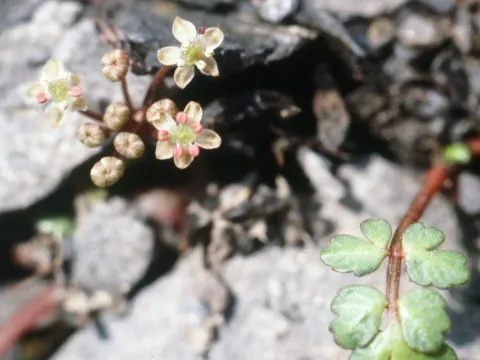
Apium bermejoi
Apium bermejoi
Apium bermejoi is a perennial herbaceous plant belonging to the Apiaceae family. It is a highly localized endemic species found exclusively on the island of Menorca, where it thrives in extreme environmental conditions.
What the section contains
Apium bermejoi
The plant has evolved to grow within cracks and crevices of limestone cliffs near the coastline. This specialized habitat exposes the plant to constant sea spray and wind, requiring significant salt tolerance and a robust root system to anchor in rocky substrates.
Botanically, the species is characterized by its compact, prostrate habit and deeply divided leaves, which are adaptations to minimize water loss and withstand harsh Mediterranean winds. These features allow it to survive in areas where soil availability is minimal.
In terms of ecological requirements, Apium bermejoi needs high air humidity and full sun exposure. It is highly sensitive to soil compaction and waterlogging, meaning that any effort to propagate it must prioritize excellent drainage and precise light control.
Given its status as a critically endangered species, it is not grown as an agricultural crop. Its management is entirely focused on in-situ conservation and strictly controlled propagation within botanical institutions to prevent extinction.
The main threats to Apium bermejoi include habitat loss due to coastal development and the encroachment of invasive plant species that outcompete the endemic population for limited space and nutrients.
Pests such as aphids and leaf-mining insects represent a potential threat to the plant's health, particularly in captive breeding programs where natural predators may be absent. These insects can weaken the plant by feeding on its tissues.
Fungal pathogens associated with damp environments can also pose a risk if the plant is grown in conditions where air circulation is poor or where substrate moisture levels are too high for extended periods.
Climate change and rising sea levels present a long-term risk for this species, as its coastal cliff habitats are increasingly vulnerable to erosion and permanent flooding, which would destroy the few remaining wild colonies.
Current conservation strategies focus on protecting existing sites from human activity and conducting botanical studies to better understand the plant's reproductive needs, ensuring that viable populations are maintained for the future.