
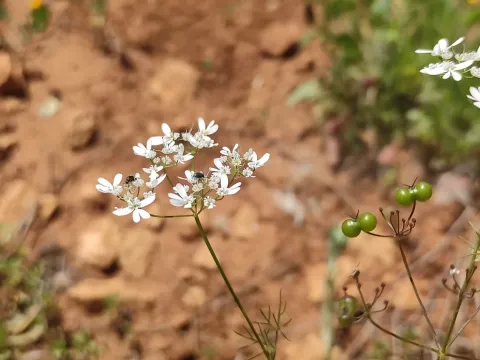
Bifora
Bifora
Bifora is a genus of flowering plants in the family Apiaceae. In agricultural contexts, species such as Bifora radians are studied for their potential as aromatic and essential oil-bearing plants, native to the Mediterranean region and parts of Western Asia.
What the section contains


Bifora
The sowing process typically begins in early spring. The crop requires well-drained soil and a consistent temperature of at least 5-10 degrees Celsius to initiate germination successfully. Proper field preparation, including plowing and loosening, is essential.
Seed depth is critical for this crop and should be maintained at 2-3 cm. Precision drilling ensures optimal plant density, which prevents overcrowding and allows each individual plant to develop its vegetative mass fully.
Crop rotation plays a significant role in the success of Bifora. It performs best following cereal grains, which helps minimize the presence of specific soil-borne pathogens that commonly affect Apiaceae species.
Early season weed control is a priority during the sowing phase. As the seedlings are slow to establish in the first few weeks, maintaining a weed-free environment is vital for maximizing future yield potential.
Bifora thrives in sunny, open locations with direct light exposure. It is well-adapted to semi-arid climates, demonstrating significant drought tolerance once the root system has become firmly established in the soil.
Soil requirements involve neutral pH levels and a loamy or sandy-loam texture. Excellent drainage is non-negotiable, as waterlogged conditions lead to rapid decay of the taproot system and reduced productivity.
Fertilization regimes should focus on providing balanced nutrition. While excessive nitrogen leads to lush leaves but sparse fruit, adequate phosphorus and potassium levels are necessary for reproductive success and oil quality.
Temperature management is generally straightforward as the plant is hardy; however, extreme heatwaves during the flowering stage require irrigation to prevent flower drop and ensure consistent seed set.
The crop is highly sensitive to soil compaction. Regular cultivation or inter-row hoeing is recommended to maintain the soil structure and allow for proper root respiration throughout the growth cycle.
The primary diseases affecting Bifora include powdery mildew and various rust fungi. These conditions are exacerbated by humidity and stagnant air, making proper plant spacing a primary defensive strategy.
Pest management focuses on controlling aphids and specific umbrella-feeding insects that target developing flower heads. Integrated pest management (IPM) practices, such as encouraging beneficial insects, are highly effective.
Chemical control must be applied with caution, respecting the specific needs of essential oil crops, as residues can affect the final market value and quality of the extracted oils.
Root pathogens can occur if the field is inadequately drained. Monitoring for yellowing of leaves or stunted growth is necessary to intervene before root rot becomes systemic across the plantation.
Routine field scouting is essential during the pre-flowering phase. Early detection of any pest pressure allows for targeted localized treatments, reducing the need for broad-spectrum chemical applications.
Harvesting is typically performed once the seeds reach physiological maturity, indicated by a change in color and a characteristic aroma. Timing is crucial to avoid premature shattering of seeds in the field.
Modern harvesting techniques involve the use of specialized grain combines adjusted for small seeds to minimize loss during the cutting and threshing process.
After collection, the moisture content must be monitored closely. Immediate drying in well-ventilated areas or specialized grain dryers is required to preserve the quality and oil content of the seeds.
Proper storage is essential to prevent mold growth and maintain the integrity of the essential oils. Seeds should be kept in cool, dark, and moisture-controlled conditions to extend shelf life.
Post-harvest cleaning removes debris and plant matter, ensuring the final batch meets standard quality benchmarks for the food or pharmaceutical industry.