
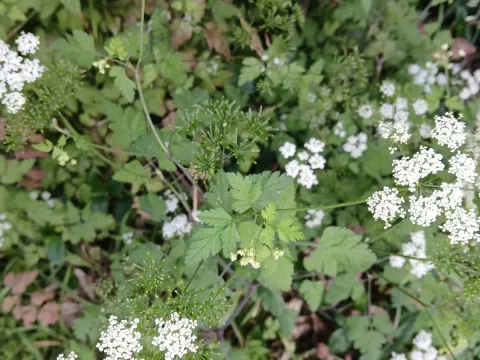
Rough chervil
Chaerophyllum temulum
Rough chervil (Chaerophyllum temulum) is a biennial herbaceous plant belonging to the Apiaceae family. It is widely distributed across Europe, Western Asia, and North Africa, commonly found in shady habitats such as woodland edges, hedgerows, and roadsides.
What the section contains
Rough chervil
The plant typically grows to a height of 50 to 100 cm. Its stem is notable for having purple mottling and being covered in rough, bristly hairs, which serves as a key identification feature. The foliage consists of bipinnate leaves that form a dense basal rosette in the first year of growth.
Regarding soil requirements, Chaerophyllum temulum prefers fertile, moist, and well-drained soils. It thrives in nitrogen-rich environments and is highly adaptive to various shade levels, allowing it to compete effectively in disturbed habitats.
Reproduction is solely via seeds, which are produced in large numbers during the second year of the plant's life cycle. The flowering period occurs from June through July, producing small, white, compound umbels that are attractive to various pollinators.
While often treated as a common weed, it is essential to recognize its potential toxicity. It can cause adverse reactions if ingested by livestock, making it a plant that requires management in agricultural areas dedicated to pasture or hay production.
The plant is susceptible to several fungal diseases, including powdery mildew, which can significantly weaken it during periods of high humidity. Furthermore, various aphid species frequently colonize the leaves, acting as vectors for plant viruses.
In terms of insect pests, the plant can be infested by specific types of beetles and weevils that feed on the foliage and developing seeds. These interactions can limit the spread of the population in natural settings but are rarely sufficient to control it in cultivated areas.
Mechanical control, such as regular mowing before the plant sets seeds, is considered the most effective way to suppress its expansion. By preventing the completion of the biennial cycle, the seed bank in the soil is gradually depleted over successive years.
Chemical intervention involving systemic herbicides may be required in intensive farming scenarios to clear fence lines and field edges where this species often congregates. Integrated pest management practices remain the most sustainable strategy for long-term control.
Due to its opportunistic nature, Rough chervil requires consistent monitoring in fields bordering non-cultivated plots. Rapid identification in the rosette stage is critical to prevent the establishment of dense patches that could compromise forage quality.