
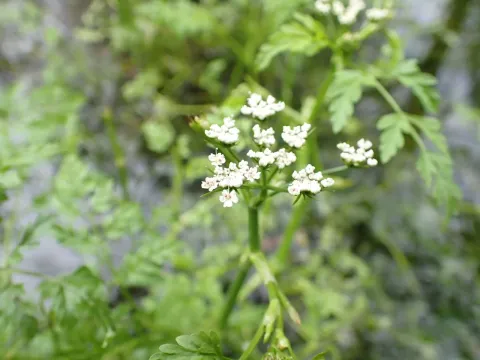
River water-dropwort
Oenanthe fluviatilis
River water-dropwort (Oenanthe fluviatilis) is a perennial herbaceous plant belonging to the Apiaceae family. It is a specialized aquatic plant commonly found in flowing waters, where it creates intricate root systems anchored in the sediment of rivers and clear streams.
What the section contains
River water-dropwort
Seed propagation is the natural method of spread, occurring as seeds mature and drift downstream to find suitable riverbeds. For cultivation, seeds are sown in fine-textured substrate submerged in shallow water during late spring, once the water temperature provides enough heat for germination.
Vegetative propagation is the most reliable method for established aquatic plantings. Segments of the rhizome, including at least one healthy growth node, are planted into the riverbed or container substrate at a depth of 20–40 centimeters to ensure firm stabilization against water current.
The optimal time for planting is early spring before the plants enter their rapid growth phase. Proper spacing is essential, as the plant spreads through creeping rhizomes that can quickly colonize the available benthic space, requiring about 30–50 centimeters of clearance between initial plantings.
Establishing the plants requires a stable environment where current is not too aggressive to displace the seedlings. Once the root systems are properly anchored in the mud or silt, the plant becomes remarkably resilient, producing a robust rosette of submerged and floating leaves throughout the summer.
The plant has specific environmental needs, preferring slow-flowing, clean, and oxygen-rich water. It is highly sensitive to water pollution and serves as a reliable bio-indicator for the health of freshwater ecosystems, thriving only where water quality remains high.
Soil requirements focus on nutrient-rich sediments such as silts, clay-loams, or organic-rich muds. A deep layer of substrate is beneficial for anchoring the long, spreading rhizomes, allowing the plant to draw necessary minerals directly from the riverbed rather than relying on water columns.
Temperature range for active development is between 10 and 22 degrees Celsius. While it can survive in cooler temperatures, development slows significantly if water temperatures drop below 8 degrees. It is important to avoid environments that become stagnant or overly warm during peak summer months.
Light levels should be moderate to high. Although it can grow in partial shade, optimal photosynthesis occurs in bright, diffuse light, which helps the plant maintain a compact growth habit and vibrant green foliage color without stretching the stems excessively.
Water pH should ideally remain neutral or slightly acidic. Dramatic fluctuations in water chemistry, caused by runoff or chemical imbalance, can lead to nutrient lockout and general plant decline, manifesting as yellowing of leaf tips and stunted rhizome growth.
Fungal diseases, particularly root rot, are the primary threat to this plant, often induced by stagnant water or anaerobic conditions within the sediment. Poor circulation in a closed system encourages the proliferation of these harmful soil-borne pathogens.
Pests including aquatic snails and certain insect larvae can significantly damage the tender foliage. In managed ponds, these populations must be monitored closely to prevent them from defoliating the plant before it has a chance to mature during the spring and early summer.
Competition from invasive algae or faster-growing aquatic weeds can be devastating. Dense algal mats block sunlight and compete for dissolved nutrients, quickly overwhelming the slower-growing river water-dropwort and leading to the collapse of the local population.
Bacterial spots can appear if the leaves are frequently exposed to physical damage or if the water quality deteriorates due to excess nutrient runoff. Maintaining a stable environment is the most effective preventative measure against these infections.
Management strategies should focus on manual weeding of invasive plants and maintaining a healthy balance of aquatic organisms within the system. Avoiding synthetic fertilizers in the surrounding land area prevents the nutrient spikes that fuel harmful algal blooms, protecting the health of the plants.