
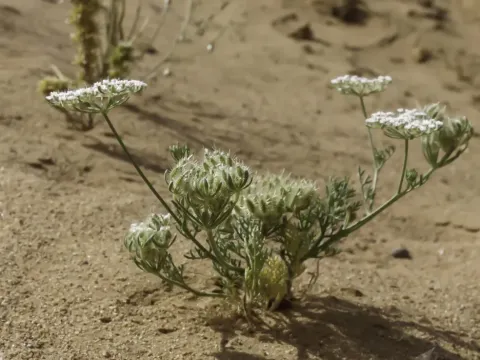
Saharan carrot
Daucus sahariensis
The Saharan carrot (Daucus sahariensis) is a distinct species within the Apiaceae family. It is recognized for its evolutionary adaptation to the harsh arid environments of North Africa, distinguishing it significantly from common garden cultivars.
What the section contains
Saharan carrot
Native to the Sahara Desert region, this plant has evolved to thrive in environments characterized by extreme heat and erratic precipitation. Its geographical range is strictly tied to specific desert and semi-desert ecosystems where other varieties would struggle to survive.
Regarding soil requirements, the plant thrives in sandy or rocky substrates that ensure excellent drainage. Unlike agricultural carrots, Daucus sahariensis does not require deep, nutrient-rich loam, but rather depends on stable soil structure that supports its taproot development in arid conditions.
The botanical structure of the plant features reduced leaf surfaces and deep root penetration to optimize water uptake. These physiological traits make it a valuable subject for botanical research concerning drought tolerance mechanisms in the Apiaceae family.
Economically, this species is not cultivated for mass production. Its primary value lies in its genetic diversity, serving as a vital genetic resource for plant breeders aiming to develop more resilient carrot varieties capable of surviving climate change and water scarcity.