
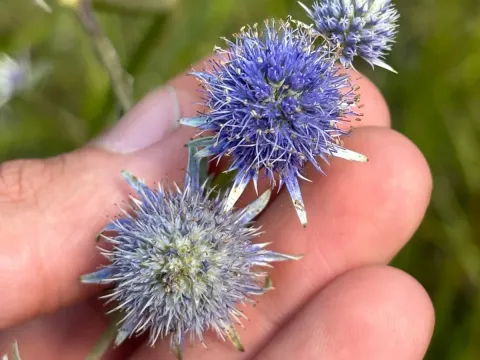
Rattlesnake Master
Eryngium aquaticum
Rattlesnake Master (Eryngium aquaticum) is a herbaceous perennial plant belonging to the Apiaceae family. Despite its common association with moisture, it is native to the wet prairies and marshes of North America, where it thrives in soil that remains consistently moist yet allows for drainage.
What the section contains
Rattlesnake Master
Botanically, this species is defined by its long, yucca-like leaves and distinct globose flower heads. These flower heads are surrounded by prickly bracts that provide a unique architectural silhouette, making the plant highly sought after for wild-style garden designs and pollinator-friendly landscapes.
Cultivation requires full sun exposure and fertile, well-draining soil. While the species is adapted to damp environments, it is essential to ensure that the site does not become stagnant, as the root system benefits from oxygenation during the active growing season.
Climate requirements include a preference for temperate zones, though the plant shows significant hardiness once established. It is an excellent choice for rain gardens or low-lying areas where other ornamental plants might struggle due to periodic saturation of the soil.
In addition to its aesthetic value, the plant is a critical resource for native pollinators, including specialist bees and wasps. Its deep root system also helps in soil stabilization, making it a valuable component of native meadow restoration projects.
The primary threats to this plant are soil-borne fungal diseases triggered by poor drainage. If the substrate remains waterlogged for extended periods, the crown and roots may succumb to rot, necessitating the selection of a well-drained planting site.
Pests such as aphids and spider mites can occasionaly affect the foliage, particularly in hotter, drier regions. Integrated pest management, focusing on early detection and biological control, is recommended to keep plants healthy throughout the summer months.
Slugs and snails can pose a challenge to young seedlings or plants emerging in early spring. Protecting the surrounding area with physical barriers is an effective strategy to reduce herbivore damage during the early stages of development.
Leaf spot infections may occur if air circulation around the plants is insufficient. Proper spacing during planting is essential to ensure that leaves dry quickly after rainfall, thereby reducing the conditions favorable for fungal growth.
Overall, maintaining the plant's vigor through proper soil preparation and annual cleanup of debris significantly reduces the risk of disease. Observing the plant's health regularly allows for quick intervention, ensuring its longevity in the garden.