
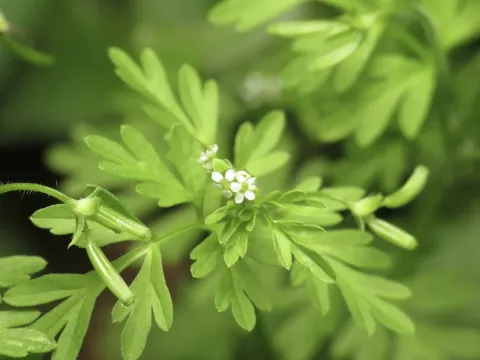
Spreading chervil
Chaerophyllum procumbens
Spreading chervil (Chaerophyllum procumbens) is an annual herb belonging to the Apiaceae family. It is native to North America and is primarily grown for its delicate, aromatic foliage used in culinary applications.
What the section contains
Spreading chervil
Sowing should take place in early spring as soon as the soil is workable. It prefers cool temperatures, making it an excellent crop for early season harvests before the summer heat arrives.
Seeds are sown in rows spaced approximately 20–25 cm apart. Due to the small size of the seeds, they should be covered with only a thin layer of soil, about 1 cm deep, to ensure successful germination.
Consistent moisture is essential during the germination phase, which typically takes about two weeks. Once established, the seedlings should be thinned to provide adequate space for development.
Succession planting every 3–4 weeks can be practiced to maintain a continuous supply of fresh greens throughout the cool season of the year.
The plant thrives in fertile, well-draining loamy soils with a neutral pH level. It is sensitive to waterlogging, so ensuring good drainage is vital for root health and overall plant vigor.
Spreading chervil is a shade-tolerant plant. It performs best in partial shade, as intense afternoon sunlight can cause the plant to bolt prematurely, shifting energy from leaf production to flower formation.
Optimal growth occurs at temperatures between 15°C and 20°C. If temperatures exceed 25°C, the foliage becomes tough and loses its characteristic flavor, necessitating harvest before the heat wave.
Regular irrigation is required to keep the soil consistently moist but not saturated. Drought stress is a major factor in reducing the quality and quantity of the harvestable biomass.
Adding well-rotted compost to the soil before planting provides the necessary nutrients for steady growth. Excessive nitrogen fertilizer should be avoided to prevent nitrate accumulation in the leaves.
Common issues include fungal infections such as powdery mildew, which often occurs in damp, crowded conditions with poor air circulation. Proper spacing is the primary preventative measure.
Aphids are the most common pests affecting this crop. They tend to cluster on the undersides of leaves and can cause yellowing and stunted growth if left unmanaged.
Slugs and snails may occasionally feed on young, tender leaves during wet weather. Using physical barriers or traps can help protect the crop without the need for harsh chemicals.
Crop rotation is recommended to avoid soil-borne pathogens. Avoid planting spreading chervil in areas where other Apiaceae crops have been grown in the previous season.
Monitoring for signs of pests or disease should be a routine part of the management plan to ensure early intervention before significant damage occurs to the foliage.
Harvesting usually begins 6–8 weeks after planting when the plant has developed a healthy, leafy rosette. Individual leaves can be harvested as needed, or the whole plant can be cut back.
Harvesting should be done in the morning to preserve the essential oils that provide the plant's unique aroma. Cutting the stems near the base encourages the plant to produce a second flush of growth.
Freshly harvested chervil is perishable and should be stored in a cool place or a refrigerator. For best results, use it within a few days of harvesting to enjoy its full flavor profile.
If a surplus is produced, the leaves can be dried in a dark, airy place, though they lose some potency. Freezing the chopped leaves in water or oil is a more effective way to retain flavor.
After the harvest, if the weather remains cool and moisture is provided, the plants can continue to develop, often allowing for multiple cuttings throughout the early spring and autumn.