
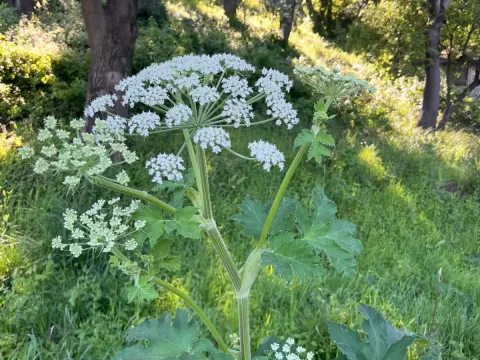
Sweet cowparsnip
Heracleum dulce
Sweet cowparsnip (Heracleum dulce) is a robust perennial herb belonging to the Apiaceae family, historically utilized in various regions as a high-yielding forage crop.
What the section contains
Sweet cowparsnip
Seeds are typically sown in late autumn or early spring, as soon as the soil reaches a temperature of 5 to 8 degrees Celsius to initiate germination.
The optimal sowing depth is 2–4 centimeters, ensuring that the seeds are placed in moist, well-prepared soil to facilitate uniform emergence across the field.
For efficient growth, row spacing should be maintained between 45 and 60 centimeters, allowing for mechanical weed control and proper plant development during the first year.
Adequate seedling density is essential; early thinning may be required to ensure that each plant has enough space and nutrients to establish a strong root system.
Heracleum dulce thrives in temperate climates, demonstrating excellent winter hardiness and the ability to withstand frost without compromising its perennial survival.
The crop prefers deep, fertile loamy soils with a neutral or slightly acidic pH, rich in organic matter, and capable of maintaining consistent moisture levels.
Water requirements are significant; constant soil moisture during the active vegetative growth phase is crucial for achieving high biomass production.
Fertilization with organic compost or balanced NPK minerals is recommended to support rapid leaf development and the sustained productivity of the plants.
Proper field drainage is necessary to prevent waterlogging, as the species is sensitive to root hypoxia, which can inhibit long-term plant vitality.
Under optimal management, sweet cowparsnip can produce yields ranging from 40 to 60 tons of green biomass per hectare, making it a valuable feed resource.
The nutritional profile of the plant is characterized by a high protein content and essential sugars, which are particularly beneficial for ruminant livestock diets.
The crop is highly regenerative, allowing for multiple harvests within a single growing season if the plants are given adequate time to recover after each cut.
Longevity of the stand is a significant advantage, with fields remaining productive for 5 to 7 years before requiring replanting or rejuvenation of the soil.
Timing the harvest is critical; nutritional value peaks during the early budding phase, which maximizes both the quality and palatability of the resulting silage.
Common agricultural diseases include powdery mildew and various leaf spot fungi, which typically emerge under conditions of poor air circulation and excessive humidity.
Pests such as aphids and specific moth larvae can affect the flower buds and leaves, necessitating careful monitoring throughout the active growing season.
Integrated pest management strategies, focusing on biological controls and proper crop spacing, are the preferred methods for protecting the health of the stand.
Good agricultural practices, such as maintaining spatial isolation and systematic rotation, significantly reduce the risk of widespread disease outbreaks.
Regular inspections are vital to catch early signs of pest pressure before they impact the overall biomass output and the quality of the fodder.
Harvesting is performed using forage harvesters, ensuring that the cut height is at least 10–12 centimeters to avoid damaging the crown and ensure regrowth.
For silage purposes, the crop should be harvested during the early flowering stage to ensure the highest balance of fiber, sugar, and protein content.
Seed harvesting requires careful timing, targeting the central umbels as they turn brown, while avoiding excessive drying that leads to seed shattering.
Immediate processing after mowing is essential to prevent rapid fermentation losses and ensure the preservation of the feed's nutritional value during storage.
High-quality ensiling requires compacting the chopped material in silos to exclude oxygen, creating the necessary anaerobic environment for stable preservation.