
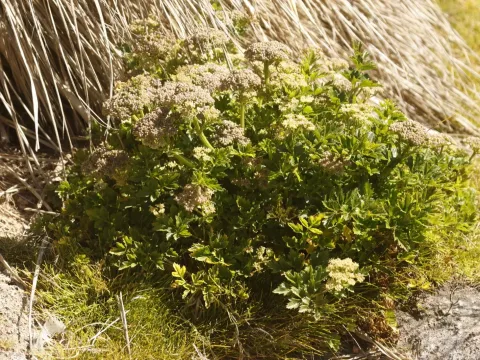
Southern celery
Apium australe
Southern celery (Apium australe) is a perennial herbaceous plant belonging to the Apiaceae family. It is naturally distributed across the Southern Hemisphere, particularly in South America and Australia.
What the section contains
Southern celery
The plant features a robust root system and dissected leaves, which are typical characteristics of its genus. It has evolved to thrive in coastal environments, demonstrating high resilience to wind and harsh outdoor conditions.
Botanically, this species is closely related to domestic celery but possesses a more fibrous texture. It is a highly interesting subject for breeders looking for traits of salt tolerance and cold hardiness.
Reproduction occurs via seeds or vegetative propagation. In its natural range, it spreads effectively across coastal cliffs and salty meadows, indicating a strong ability to colonize new areas.
The culinary use of this plant is localized. People in the regions of its origin harvest it for its aromatic properties, which are used as a seasoning similar to conventional celery but with a more intense flavor profile.
Southern celery requires well-drained, fertile soil to ensure optimal development. It is sensitive to waterlogging, so soil aeration is a priority for successful cultivation in field conditions.
The plant thrives in full sun but can tolerate partial shade. Coastal climates with high air humidity are ideal for its growth, as the plant is naturally adapted to ocean breezes.
Temperature management is key: it prefers cool to moderate climates, ranging from 15 to 22 degrees Celsius. Extreme heat is detrimental to the quality of the foliage, often causing bitterness.
Regular moisture levels are necessary for the development of fleshy stalks. While it is hardy, drought stress significantly reduces the biomass yield and affects the plant's overall health.
Soil nutrient management should focus on balanced NPK ratios. Potassium is especially important for the plant’s structural integrity and stress resistance against environmental fluctuations.
Fungal diseases, specifically leaf spot and powdery mildew, are the primary threats to Southern celery. These pathogens thrive in damp, stagnant air environments commonly found in dense plantings.
Pests such as celery flies and aphids are common. They target the tender leaves, which can lead to significant economic loss if not managed with timely integrated pest management strategies.
- Implementing wide row spacing to improve air circulation.
- Monitoring for insect activity at the early stages of development.
- Using row covers as a physical barrier against leaf-mining insects.
Preventative measures include crop rotation to avoid the buildup of soil-borne pathogens. Avoiding monoculture can significantly decrease the pressure from specialized insects and local fungi.
Sanitation is vital. Removing infected plant debris prevents the overwintering of pathogens, ensuring that the next cycle starts with a lower risk of disease outbreaks.