
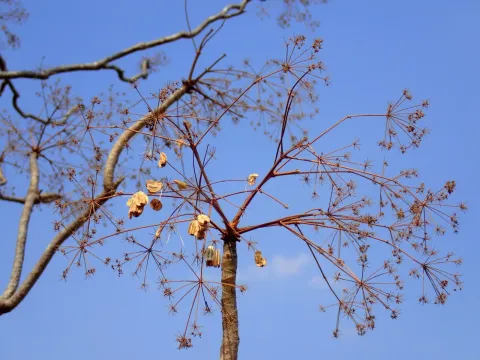
Steganotaenia
Steganotaenia
Steganotaenia is a genus of flowering plants belonging to the Apiaceae (carrot or parsley) family. Most known species, such as Steganotaenia araliacea, are native to the tropical regions of Africa, where they function as woody shrubs or small trees.
What the section contains

Steganotaenia
The plant thrives in semi-arid and savanna environments, demonstrating remarkable resilience to prolonged dry seasons. It is highly adapted to regions characterized by seasonal rainfall patterns, which influence its growth cycle.
Regarding soil requirements, Steganotaenia demands well-drained substrate, as it is susceptible to root rot in waterlogged conditions. It performs best in sandy or sandy-loam soils with moderate fertility.
Exposure to full sunlight is essential for optimal growth and the development of secondary metabolites. In areas with high light intensity, the plant accumulates higher concentrations of essential oils and other phytochemicals.
Proper cultivation management involves careful selection of planting sites with appropriate soil texture to ensure that deep root systems can develop without obstructions, as the plant is adapted to sparse forest structures.
Steganotaenia is highly valued for its applications in traditional medicine. The bark and roots contain compounds with significant therapeutic potential, frequently studied for their anti-inflammatory and analgesic effects.
Harvesting techniques typically involve sustainable pruning of branches or selective root excavation. It is crucial to employ practices that protect the longevity of the plant population to ensure long-term availability of the resource.
Post-harvest processing requires immediate drying in shaded, ventilated areas to maintain the integrity of volatile essential oils. Excessive heat during drying can lead to the degradation of active chemical components.
Storage of the finished product should occur in airtight containers protected from moisture and light. Proper conditions ensure that the harvested material retains its pharmaceutical quality for months or years.
The transition from wild-harvesting to controlled field cultivation is a key objective for agricultural researchers. Standardizing the yield and chemical consistency remains the main challenge for commercializing this crop.