
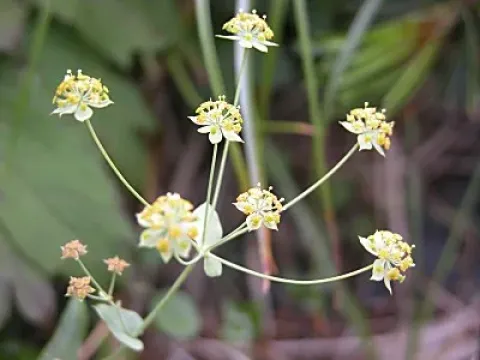
Bupleurum nipponicum
Bupleurum nipponicum
Bupleurum nipponicum is a perennial herb belonging to the Apiaceae family. It is native to the Far East region, including Japan and adjacent territories, where it grows in habitats that require specific adaptation strategies for cultivation.
What the section contains
Bupleurum nipponicum
The seeds of this species possess a dormant phase, making stratification an essential step before sowing. In agricultural practice, winter sowing is often preferred to allow natural cold stratification to occur before the seeds germinate in early spring.
When sowing in the field, seeds should be placed at a shallow depth of 1 to 2 centimeters. Because the seeds are small, precise drilling or row planting is recommended to ensure even distribution and to facilitate future weed control measures.
Seedlings emerge slowly and are highly sensitive to competition. Maintaining a weed-free environment during the first three months is crucial for the establishment of the plant's taproot system, which serves as the primary storage organ for its active compounds.
This crop is generally suitable for temperate climates. Proper selection of the site, which ensures adequate sunlight and protects the plants from waterlogged conditions, is the foundation for successful long-term production.
The plant thrives in well-drained, fertile, sandy-loam soils. Heavy clay soils that tend to compact or hold excessive moisture should be avoided as they significantly increase the risk of root rot and inhibit healthy development of the root system.
Bupleurum nipponicum prefers a neutral soil pH ranging between 6.0 and 7.0. Soils with high acidity should be treated with lime prior to planting, while overly alkaline soils may require adjustments to ensure optimal nutrient bioavailability.
As a light-loving species, it requires full sun exposure throughout the growing season. Shading, even if partial, can cause the plant to become leggy and may lead to a decrease in the concentration of secondary metabolites in the harvested parts.
The species is known for its high level of winter hardiness. It can survive harsh cold temperatures, though providing a layer of organic mulch can help stabilize soil temperature and protect the crown from freezing and thawing cycles.
Water requirements are moderate. While the plant can withstand short periods of drought, consistent moisture during the early vegetative phase is essential for rapid biomass accumulation. Excessive watering during the late season should be strictly avoided.
Yielding in Bupleurum nipponicum is a multi-year process, as the medicinal value is concentrated in the roots. Harvesting for maximum economic impact is typically scheduled for the third or fourth year of growth when the plant reaches maturity.
An average yield of 10 to 15 centners per hectare of dried roots can be expected under optimal conditions. Additionally, the aerial biomass collected during the flowering stage offers a secondary source of raw material for herbal use.
To improve yields, application of phosphorus and potassium-based fertilizers is recommended during the bud formation phase. This helps in developing more robust root structures and improves the overall chemical composition of the plant.
Weed management using mechanical cultivation or mulching plays a significant role in determining final yields. Competition from grasses and broadleaf weeds can lead to a 30% reduction in total biomass and root quality.
The plantation can remain productive for 5 years, after which the rate of root expansion declines. Systematic rotation to different fields is necessary to maintain soil health and prevent the buildup of soil-borne pathogens.
The crop is generally robust, but it can be susceptible to fungal infections such as powdery mildew or leaf spots. These are most common during periods of high humidity and poor air circulation within the field.
Pests such as aphids and spider mites can infest the foliage, particularly in hot and dry weather conditions. Using biological control agents or soft insecticides that are safe for medicinal plants is recommended to manage these threats.
Root rot, often caused by poor drainage or overwatering, is a primary threat that can destroy entire plantations. Maintaining proper drainage and avoiding nitrogen-rich fertilizers that promote overly succulent growth are key prevention methods.
Soil pests like wireworms can damage the roots. Conducting a soil survey before establishing the crop is a recommended practice to avoid planting in infested areas or to apply necessary preventive measures.
Integrated Pest Management (IPM) is the best strategy. This includes rotating crops, using certified seeds, and promptly removing diseased plant parts to ensure that the final medicinal product remains free of chemical residues.
Aerial parts are harvested during the peak flowering stage to ensure the highest levels of active ingredients. The plants are mowed at a height of 5–10 cm above the ground, allowing for quick recovery and drying of the biomass.
Root harvesting is performed in late autumn once the aerial parts have begun to senescence. This timing ensures that the plant has stored the maximum possible amount of energy and chemical compounds in its roots for the winter dormancy.
Post-harvest, the roots must be cleaned of soil and debris immediately. Washing should be efficient but gentle to prevent the loss of soluble active components that are highly valued in pharmaceutical production.
Drying is performed at controlled temperatures not exceeding 45 degrees Celsius to preserve the delicate compounds. Proper air circulation during the drying process is essential to achieve a uniform moisture level of around 10–12%.
Storage of the finished product requires cool, dry, and well-ventilated conditions. Properly sealed paper or woven bags are ideal to prevent contamination and moisture absorption, preserving the quality for at least two years.