
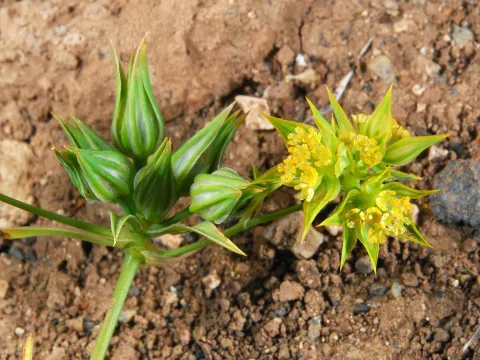
Bupleurum nodiflorum
Bupleurum nodiflorum
Successful cultivation of Bupleurum nodiflorum begins with precise sowing practices. The seeds are relatively small and require a well-prepared seedbed to ensure uniform germination and growth across the field.
What the section contains
Bupleurum nodiflorum
The optimal sowing period is during early spring when soil temperatures stabilize at around 8-10 degrees Celsius. This timing allows the plant to establish its root system before the onset of intense summer heat.
Seeds should be sown at a shallow depth of approximately 1-2 centimeters. Covering them too deeply can hinder emergence and result in a sparse crop stand, which reduces overall farm efficiency.
A row-based planting system is recommended, with spacing maintained between 30 and 45 centimeters. This layout facilitates mechanical weeding and ensures that each plant has adequate space to access sunlight and nutrients.
Post-emergence thinning is a crucial agricultural practice. Removing weaker seedlings allows the remaining plants to develop robust stems and foliage, which is essential for maximizing the yield of medicinal material.
As a member of the Apiaceae family, Bupleurum nodiflorum thrives in well-drained, fertile soils with a neutral pH. Proper soil preparation and the addition of organic amendments can significantly enhance plant vigor.
The species is light-demanding, requiring full exposure to sunlight to achieve optimal development. Shaded areas lead to weak stems and a lower concentration of secondary metabolites, which are vital for the plant's medicinal value.
Water management is critical during the initial stages of growth. While the plant possesses moderate drought tolerance, consistent moisture levels are necessary to support rapid vegetative production.
The plant performs best in regions with mild temperatures, typically between 18 and 25 degrees Celsius. Extreme fluctuations in climate can lead to premature bolting and reduced biomass quality.
Routine maintenance tasks include inter-row cultivation to keep the soil aerated and free from competitive weeds. Balanced fertilization programs focusing on phosphorus and potassium are highly beneficial.
The yield of Bupleurum nodiflorum is measured by the total biomass of dried herb produced per hectare. Consistent management practices are key to ensuring high productivity levels throughout the harvest cycle.
Achieving stable yields depends on the timing of agricultural operations, particularly harvest. Collecting the material at the peak of the flowering stage ensures the highest possible concentration of active ingredients.
Using certified, high-germination seed lots is fundamental to professional crop management. These inputs minimize gaps in the field and ensure a uniform maturation profile across the entire planted area.
Environmental factors such as rainfall and soil health play a significant role in determining final output. Strategic application of nutrients based on soil analysis can mitigate many yield-limiting factors.
Effective crop rotation is recommended to maintain soil fertility and reduce the potential for long-term accumulation of soil-borne pathogens, thereby sustaining high yields over consecutive planting seasons.
The primary agricultural threats to this crop include fungal pathogens like powdery mildew and various leaf spot diseases. These organisms can severely impact the quality of the harvested leaves and stems.
Insect pests, including aphids and various mite species, are common challenges in commercial production. They damage the foliage, reducing the overall photosynthetic capacity of the plant.
Integrated Pest Management (IPM) is the preferred approach for controlling threats. This involves monitoring fields for early signs of infestation and using biological control agents whenever possible to minimize chemical usage.
Good field hygiene is essential for disease prevention. This includes the removal and destruction of crop residues post-harvest, which helps to break the life cycle of many common pests and pathogens.
Maintaining optimal plant spacing helps improve airflow through the canopy, significantly reducing the microclimate conditions that favor fungal outbreaks. Proper moisture management also prevents root rot issues.
Harvesting Bupleurum nodiflorum at the correct phenological stage is critical for quality. The process should ideally take place during the mass-flowering phase to maximize the yield of active compounds.
Mechanical harvesting involves cutting the aerial parts of the plants. It is important to adjust the machinery to avoid damaging the base of the stems, ensuring the potential for regrowth in subsequent cycles.
Speed is essential once the plants are cut. Freshly harvested biomass should be transported to drying facilities immediately to prevent fermentation and the degradation of sensitive medicinal components.
Drying must be conducted in controlled environments at temperatures not exceeding 50 degrees Celsius. Excessive heat can cause the loss of volatile oils and reduce the therapeutic effectiveness of the final product.
Once dried, the product should be cleaned, sorted, and stored in dry, well-ventilated conditions. Protecting the harvest from moisture and direct sunlight is vital to maintaining its quality during long-term storage.