
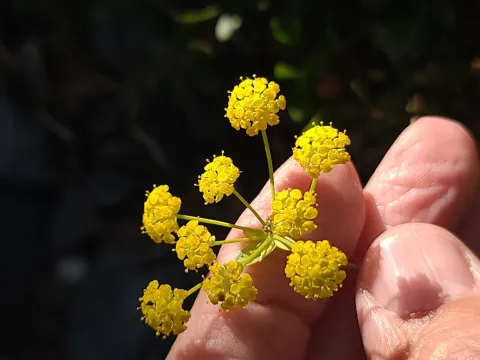
American thoroughwax
Bupleurum americanum
American thoroughwax (Bupleurum americanum) is a member of the Apiaceae family. It is a perennial herbaceous plant native to the mountainous regions of North America, typically found in alpine meadows and rocky terrain.
What the section contains
American thoroughwax
The plant is recognized by its lanceolate leaves that clasp the stem and its distinctive umbels of small yellow flowers. It develops a deep taproot, which is an evolutionary adaptation to the harsh, nutrient-poor soils of high-altitude environments.
For agricultural cultivation, the species requires well-drained soil with a neutral to slightly alkaline reaction. It does not tolerate waterlogging, so planting on elevated slopes or well-prepared raised beds is essential for success.
The species thrives in full sunlight and exhibits remarkable cold hardiness. It is well-adapted to short growing seasons, making it a viable crop for cooler northern regions where other medicinal herbs might struggle to survive.
Industrially, this crop is valued for its unique phytochemical profile. Research into its medicinal properties focuses on its saponin and flavonoid content, which are utilized in various therapeutic applications.
Fungal diseases related to high humidity represent the primary threat to the health of Bupleurum americanum plantations. Proper site selection is vital to prevent root rot.
Aphids and various larvae that feed on Umbelliferae can cause damage to the foliage and influence the quality of the harvested medicinal material.
Regular maintenance, including keeping the rows free of weeds, helps ensure that the plants receive adequate air circulation, reducing the risk of fungal outbreaks.
Monitoring the soil moisture levels is critical. During periods of excessive rainfall, it may be necessary to implement additional drainage measures to protect the root crown.
In case of pest infestation, biological control methods are preferred to maintain the integrity and purity of the herbal product intended for pharmaceutical use.