
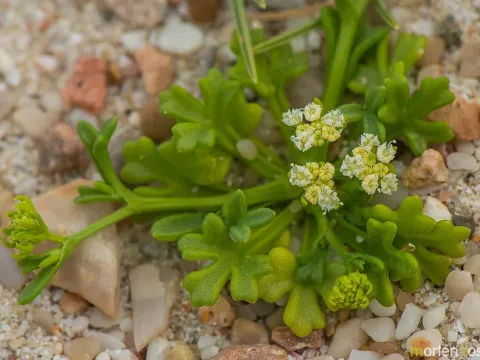
Ajwain
Trachyspermum
Ajwain (Trachyspermum ammi) is an annual crop belonging to the Apiaceae family, typically sown during the transition between winter and spring in subtropical regions.
What the section contains

Ajwain
The seeds are small and should be sown at a depth of 1–1.5 cm using a row-to-row spacing of approximately 45 cm to allow for adequate ventilation and root development.
Preparation of the seedbed involves creating a fine tilth, ensuring the soil is free of large clumps that could hinder the emergence of delicate seedlings.
Depending on the soil fertility and climatic conditions, the seed rate is generally maintained at 3–5 kg per hectare for optimal plant population density.
Early sowing is recommended to ensure that the crop matures before the onset of extreme heat or excessive rainfall, which could negatively impact seed quality.
This crop thrives in warm, sunny climates and is highly sensitive to frost, requiring a frost-free period of at least 3 to 4 months for complete development.
Ajwain prefers well-drained, fertile sandy loam soils with a balanced pH level, as it does not tolerate waterlogging under any circumstances.
Regular but moderate irrigation is essential during the flowering and seed-setting stages, ensuring the soil remains moist without becoming saturated.
While the plant is relatively hardy, it benefits significantly from supplemental applications of nitrogen and phosphorus early in the vegetative growth phase.
Adequate sunlight is the most critical environmental factor, as it directly influences the concentration of thymol and other essential oils in the seeds.
Powdery mildew is the most prevalent fungal disease affecting ajwain, often appearing during periods of high humidity and cool night temperatures.
Bacterial blight can cause significant yield losses if pathogens are present in the soil; thus, strict crop rotation with non-Apiaceae crops is highly advised.
Pests such as aphids and leaf-hoppers are common threats, as they colonize the tender tips and flowers, draining essential plant nutrients and spreading viruses.
Effective management involves monitoring field margins for weed hosts, which often serve as primary infection sites for both pests and fungal spores.
Integrated pest management (IPM) strategies, including the use of neem-based oils or soap sprays, are recommended to preserve the aromatic quality of the harvest.
The harvest phase commences when the umbels turn a distinct brown color and the seeds within become firm, indicating the peak of physiological maturity.
It is vital to harvest the crop during the cooler parts of the day to minimize seed shattering, which occurs readily when the pods become overly dry.
After cutting, the stalks are bunched and dried in a well-ventilated, shaded area to allow for natural curing without subjecting the seeds to direct heat.
Threshing should be conducted gently to ensure the seeds remain intact, followed by winnowing to remove dust, chaff, and other light debris from the final product.
The finished seeds must be stored in airtight containers within a cool environment to protect the volatile essential oils from oxidation and loss of aroma.