
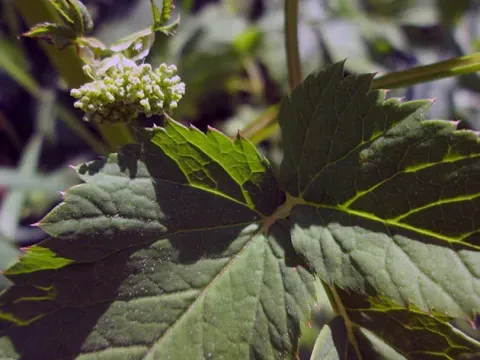
Alpine goutweed
Aegopodium alpestre
Alpine goutweed (Aegopodium alpestre) is a hardy perennial herb of the Apiaceae family, typically propagated by seeds or rhizome division.
What the section contains
Alpine goutweed
For best results, seeds should be sown in late autumn to undergo natural winter stratification, which significantly improves spring germination rates.
If spring sowing is preferred, seeds must be artificially stratified in cold storage for 60 to 90 days before being planted into the soil.
Seeds should be planted in rows with 45–60 cm spacing, buried at a shallow depth of approximately 1–1.5 cm to ensure proper development.
As germination is relatively slow, keep the planting area free of weeds and ensure the soil remains moist until the plants are well-established.
This plant thrives in cool, moist climates similar to its mountainous origin and performs exceptionally well in semi-shaded areas.
While tolerant of various soil types, it produces the highest biomass yields when grown in fertile, well-draining, humus-rich loams.
Consistent moisture is essential for vigorous growth; therefore, supplemental irrigation is necessary during dry spells throughout the summer.
Essential cultivation practices include regular hoeing of inter-row spaces to aerate the soil and the application of organic fertilizers in early spring.
Alpine goutweed exhibits excellent frost tolerance, making it a reliable perennial crop that survives harsh winter conditions without protection.
The yield of Alpine goutweed is primarily influenced by soil fertility, consistent watering, and the frequency of foliage harvesting.
Under optimal management, growers can expect approximately 2 to 3 kilograms of fresh greens per square meter per growing season.
Harvesting usually begins in early spring, focusing on young, tender leaves that possess the highest concentration of vitamins.
Preventing the plant from flowering is key to productivity; pruning developing flower stalks redirects energy back into foliage production.
Following a harvest, a light application of water often stimulates a new flush of growth, allowing for multiple cuts per season.
Alpine goutweed is generally resistant to most common plant diseases, showing high robustness in proper growing conditions.
In cases of poor air circulation and excessive humidity, powdery mildew may appear as a whitish film on the leaf surfaces.
Occasional infestations of aphids may occur on the succulent young leaves, requiring manual removal or biological control methods.
Due to its use as a culinary green, the application of chemical pesticides is discouraged to ensure food safety and quality.
Good agricultural practices, such as maintaining recommended plant density and removing old debris, are sufficient to prevent major issues.
Harvesting is performed manually by cutting the leaf stalks at the base of the plant using a sharp blade or harvesting shears.
Priority should be given to young, partially unfolded leaves, which offer the most delicate flavor and best culinary texture.
Freshly cut leaves lose moisture rapidly and should be processed or consumed shortly after harvesting to maintain quality.
Beyond fresh use, the foliage can be dried or frozen for later use as a flavorful, aromatic addition to soups, sauces, and salads.
Proper post-harvest handling, including cooling, is necessary to prevent premature wilting and maintain the nutritional profile of the product.