
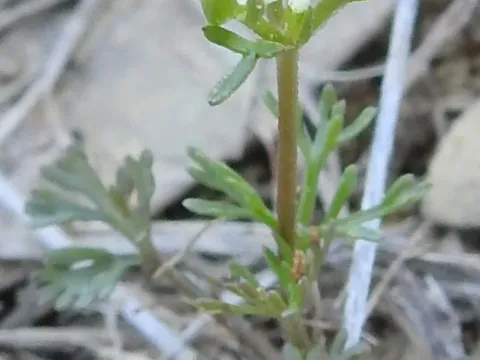
Ammoselinum
Ammoselinum
Ammoselinum is a genus of annual herbaceous plants belonging to the Apiaceae (parsley) family. Native primarily to North America, these plants are uniquely adapted to thrive in sandy and well-drained soil conditions, often found in open fields.
What the section contains


Ammoselinum
The sowing season for Ammoselinum typically begins in early spring, once the soil temperature has stabilized. Ensuring that the soil is not overly cold is crucial for achieving consistent germination rates.
Seeds should be sown at a shallow depth of approximately 1–2 cm. Given their small size, deeper sowing can significantly hinder the emergence of the seedlings and reduce overall crop density.
During the initial growth stages, it is important to maintain uniform moisture levels. However, as the plant establishes its taproot system, it gains significant resilience against shorter periods of dry weather.
For efficient agricultural production, row spacing of about 30 cm is recommended. This spacing ensures optimal airflow between plants and allows for easier mechanical or manual weeding throughout the season.
Ammoselinum requires full sunlight to achieve its full potential. The plant thrives in exposed, bright environments, and any shade can lead to leggy, weak growth and reduced vigor.
The ideal soil for this crop is light, sandy, or loamy, provided it has excellent drainage. Heavy, clay-based soils should be avoided or amended with organic matter and sand to prevent waterlogging, which is detrimental to the roots.
While the plant is quite hardy regarding temperature, it prefers a temperate climate. Extreme heat during the mid-summer season may trigger early flowering, which can shift energy away from vegetative growth.
Regular but moderate irrigation is the key to success. Overwatering is significantly more dangerous than brief periods of drought, as the roots are highly susceptible to rot in anaerobic, water-saturated environments.
Fertilization should be handled with care. A balanced, light application of nutrients is preferred over high-nitrogen fertilizers, which tend to encourage excessive stem growth at the expense of root and leaf quality.
Root rot is the most common disease threat, particularly in soils with poor drainage. Once roots are compromised, the entire plant often wilts rapidly, making prevention through soil management the primary solution.
Pests such as aphids can pose a challenge by feeding on the tender young leaves and stems. Regular inspection of the crop during the peak growing months allows for quick intervention before the infestation becomes severe.
Powdery mildew may develop if there is poor air circulation combined with high humidity. Ensuring proper plant spacing is a fundamental strategy for mitigating this fungal issue throughout the growing cycle.
Various soil-dwelling larvae can sometimes damage the roots. Crop rotation is highly recommended to disrupt the life cycles of these pests and maintain the health of the field for future planting seasons.
Weed management is critical during the first few weeks of growth. Ammoselinum grows relatively slowly at the start, making it highly susceptible to competition from faster-growing weeds if not properly controlled.