
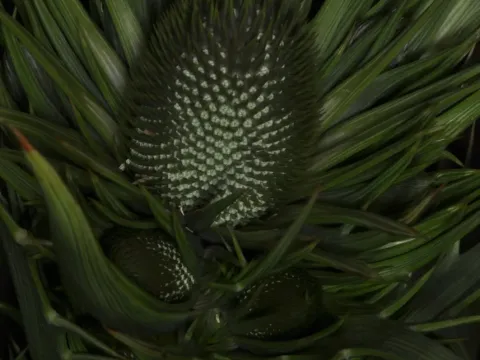
Agave-leaved sea holly
Eryngium agavifolium
Sowing seeds of Eryngium agavifolium is best done in late autumn as a winter sowing in the open ground or in early spring using seedling trays. Due to the high density of the seeds, stratification for one to two months at low temperatures is highly recommended to improve germination rates.
What the section contains
Agave-leaved sea holly
When using the seedling method, seeds should be sown in containers during February or March, ensuring consistent lighting and moderate moisture. Germination is usually a slow process, requiring patience and a stable temperature range of 18–20 degrees Celsius to be maintained.
Transplanting hardened seedlings to their permanent location is done in late spring, once the threat of frost has passed. Planting spacing must take into account the size of the mature plant, leaving at least 40–50 centimeters between specimens to ensure adequate airflow.
Vegetative propagation is achieved through division of the root clump in spring or autumn. This method allows for a faster establishment of mature flowering plants but requires careful handling due to the taproot system, which can be sensitive to mechanical stress.
Choosing a site for planting is crucial: prioritize areas with full sun exposure, as lack of light leads to elongated flower stalks and a loss of the plant's natural architectural form. Direct sunlight is essential for achieving the vibrant colors of the inflorescences.
Eryngium agavifolium, a member of the Apiaceae family, is native to the regions of Argentina and Uruguay. In temperate climates, the culture shows good winter hardiness, although in regions with severe winters, mulching of the root zone is recommended for protection.
The plant prefers loose, well-drained soils with a neutral or slightly alkaline pH. It is highly sensitive to waterlogging, making a proper drainage layer mandatory when growing in heavy clay soils to prevent root rot and ensure long-term plant health.
Agrotechnical care includes minimal irrigation, as the species exhibits high drought tolerance. Excessive soil moisture, combined with high humidity, can lead to fungal diseases and a reduction in the aesthetic quality of the leaf rosettes, which resemble agave foliage.
The culture does not require frequent fertilization; an excess of nitrogen can negatively impact the strength and stability of the flower stalks. A small application of complex mineral fertilizers in the spring is sufficient to stimulate growth and ensure robust leaf development.
During the flowering period, the plant produces dense, spiky, globe-shaped inflorescences that maintain their structure for a long time. Weed management is critical in the early stages of growth, as young plants develop slowly and are sensitive to competition from aggressive weeds.
The main threats to Eryngium agavifolium are root rots, which occur when soil aeration is compromised or irrigation is excessive. If the root system is damaged, the plant may perish quickly, so prevention focuses on humidity control and selecting an appropriate, well-drained planting site.
In crowded planting conditions, powdery mildew may develop, appearing as a white film on the leaves. Treatment involves the use of fungicides, but ensuring proper ventilation between plants by adhering to recommended planting distances is a more effective long-term strategy.
Pests such as aphids or leaf-chewing insects are rare due to the tough, leathery structure of the leaves. Nevertheless, during peak pest activity, periodic inspections are recommended to allow for timely intervention with biological or chemical insecticides if necessary.
Damage to the root system by soil-dwelling larvae can weaken the plant. Utilizing preventive measures, including proper soil preparation and the use of specialized treatments before planting, is advised if the site has a high population of soil pests.
Always monitor the condition of the leaf plates; any signs of chlorosis or necrosis should be analyzed promptly to identify potential nutrient deficiencies or pathogenic activity. Early removal of affected parts helps prevent the spread of disease to healthy plants.
Harvesting inflorescences for floral arrangements or dried flower projects is done when the flower stalks are fully colored. It is vital to cut the heads before they begin to shed or lose their vibrancy due to external weather conditions.
Cut material should be dried hanging upside down in a dark, well-ventilated room. This process helps maintain the stiffness of the spiky heads and their characteristic hue, which are highly valued by professional florists for winter bouquets and ornamental compositions.
If the goal is seed production, the inflorescences should be harvested only after they have turned brown and dried completely on the plant. After collection, the seed material should be further dried, cleaned of spiky bracts, and stored in a cool, dry place.
When working with the plant during harvest, always wear protective gloves, as the bracts and leaves have sharp, prominent spines. Care must also be taken during the transport of fresh material to ensure the integrity of the delicate flower heads.
After the flowering cycle is complete, spent stems should be removed at the base of the leaf rosette unless seed collection is required. This practice directs the plant's energy toward renewing its growth buds and maintaining a healthy, vigorous rosette for the following season.