
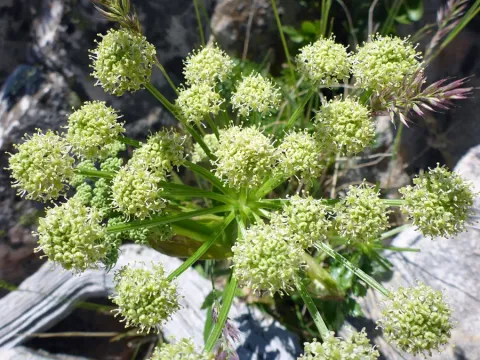
Angelica roseana
Angelica roseana
Angelica roseana is a perennial herb belonging to the Apiaceae family. Sowing is typically performed in late autumn, as the seeds require a period of cold stratification to break dormancy and ensure high germination rates.
What the section contains
Angelica roseana
If spring sowing is preferred, seeds must be artificially stratified at low temperatures for 8 to 12 weeks. Sowing depth should be shallow, generally not exceeding 1.5 cm, as seeds need a small amount of light to trigger germination.
Row spacing should be maintained at 50–60 cm to allow the plant to develop a large basal leaf rosette. Proper spacing is essential for air circulation and reducing competition for nutrients.
Germination is often slow and uneven, requiring constant soil moisture in the weeks following planting. Mulching can be used to prevent surface crusting and keep the soil temperature stable for the seedlings.
The plant is known for its hardiness, capable of surviving harsh winters in temperate climates. It enters a dormant state after the first frosts and resumes rapid growth as soon as soil temperatures rise in early spring.
Angelica roseana thrives in deep, fertile, and moisture-retentive soils. It performs best in well-drained loam or sandy-loam conditions, as standing water can easily cause root decay in these plants.
The plant prefers sunny locations but can tolerate partial shade during the hottest parts of the day. Consistent moisture throughout the growing season is the primary requirement for healthy development.
A neutral to slightly acidic soil pH is ideal for the cultivation of this species. If the soil is too acidic, applying lime before planting will help improve nutrient uptake and overall growth rates.
Regular cultivation between rows is necessary to aerate the soil and control weeds. This practice is particularly important during the first year of growth when the plant is establishing its root system.
Organic matter such as compost or well-rotted manure should be incorporated into the soil before planting. This ensures a steady supply of nutrients and improves the water-holding capacity of the substrate.
The most common health issues for Angelica roseana include fungal infections such as powdery mildew and root rot. These problems are often directly linked to poor drainage or overly humid conditions.
Pests such as aphids and carrot rust flies can infest the foliage and roots. Integrated pest management, focusing on biological controls and crop rotation, is highly recommended to manage these threats.
Overcrowding plants increases the risk of disease transmission and insect outbreaks. Providing adequate spacing ensures that the foliage dries quickly after rain, reducing the incidence of mold and mildew.
Crop rotation is essential, and this species should not be planted in soil recently occupied by other Apiaceae family members to prevent the buildup of soil-borne pathogens and specific pests.
Timely removal of debris and weed control around the plants helps to eliminate harborages for insects and fungal spores. Maintaining a clean cultivation site is the best proactive approach for health.
Harvesting for roots is best performed at the end of the second year of growth or in early spring of the third year. This is when the concentration of essential oils and active compounds is highest.
Roots should be carefully unearthed using a pitchfork to minimize mechanical damage. After harvest, they must be washed thoroughly in cool water to remove soil and debris before proceeding to drying.
Drying is a critical step and should be carried out at temperatures between 40°C and 45°C. Rapid drying at high heat can degrade the delicate volatile compounds that give the plant its characteristic aroma.
If harvesting foliage, it should be done during the flowering stage. Stems and leaves should be hung in thin bunches in a shaded, well-ventilated area to maintain their quality and color.
Storage of the final product requires airtight containers kept in a cool, dark, and dry place. Proper storage prevents loss of quality and protects the botanical material from environmental damage.