
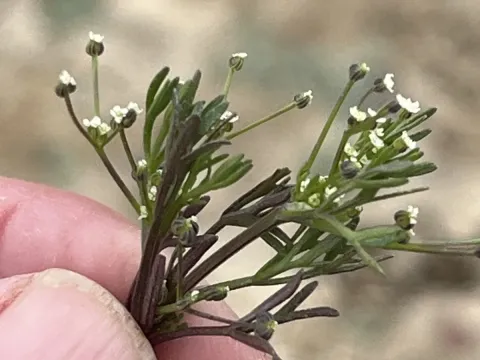
Apiastrum
Apiastrum
Apiastrum (genus Apiastrum) is a member of the Apiaceae family, native primarily to parts of California. This annual herb is valued for its delicate botanical structure and resilience in arid conditions.
What the section contains

Apiastrum
Sowing should take place in early spring once the danger of frost has passed. Seeds are typically sown directly into well-drained, loose soil at a depth of approximately 1 to 2 centimeters to ensure effective germination.
Adequate row spacing is necessary to facilitate maintenance and prevent overcrowding. Proper aeration is crucial during the early stages of development to allow the young seedlings to establish a strong root system.
Thinning seedlings is an essential agronomic practice for this crop. Maintaining proper spacing ensures that each plant receives sufficient nutrients and light, which is fundamental for healthy vegetative growth.
Weed control remains a top priority during the first few weeks after sowing. Since the crop develops relatively slowly at the start, it requires careful management to avoid competition from faster-growing invasive grasses.
Apiastrum thrives in light, sandy, or well-drained loamy soils. The plant is sensitive to waterlogging, so choosing a site with excellent drainage properties is essential for preventing root-related disorders.
This crop requires full sun exposure to reach its full potential. While it exhibits some tolerance to drought once established, regular irrigation during dry periods promotes more vigorous foliage development.
Climatic requirements are centered around the Mediterranean climate pattern. Temperatures between 15°C and 23°C are ideal for consistent growth and metabolic functions throughout the vegetative cycle.
Soil pH should ideally be neutral or slightly acidic. If the soil is nutrient-poor, a light application of balanced organic matter can improve soil structure and water-holding capacity without causing excessive foliage growth.
Avoiding nitrogen-heavy fertilizers is recommended, as excessive growth can lead to weakened stems, making the plants more susceptible to lodging and environmental stress.
Powdery mildew is the most common fungal threat, typically appearing during high humidity or poorly ventilated conditions. Management strategies focus on improving air circulation and maintaining proper plant density.
Root rot, caused by over-irrigation or heavy soil, can devastate a crop. Implementing a robust irrigation schedule and ensuring soil porosity are the primary defenses against these soil-borne pathogens.
Pests such as aphids pose a risk by congregating on tender stems and leaves. Regular monitoring of the underside of leaves is necessary to catch infestations before they cause significant damage.
Spider mites can be problematic in dry, hot conditions. They often cause yellowing of the foliage, which reduces the plant's capacity for photosynthesis and overall vigor.
Effective Integrated Pest Management (IPM) practices, including the removal of crop residues after harvest and crop rotation, are essential to maintain field health and reduce the inoculum of common pests.