
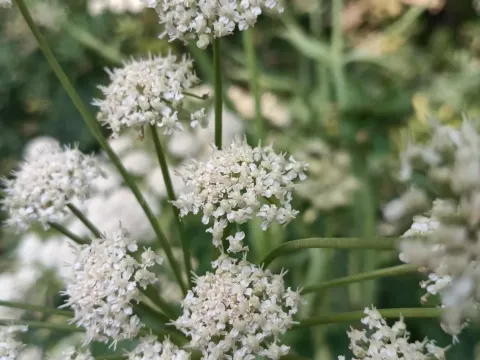
Angelica wheeleri
Angelica wheeleri
Angelica wheeleri is propagated by seeds, which require a period of cold stratification to break dormancy. Sowing in late autumn is the preferred method, as natural winter temperatures provide the necessary physiological stimulus for uniform germination in spring.
What the section contains
Angelica wheeleri
The planting site must be prepared by creating a fine, weed-free tilth. Seeds should be sown at a shallow depth of approximately 1–2 centimeters, ensuring they are covered with enough soil to retain moisture while remaining close enough to reach the surface easily.
In field production, spacing should be set at 50–60 centimeters between rows. This allows the plant's rosettes to expand fully, preventing overcrowding and ensuring adequate airflow, which is critical for reducing the incidence of fungal diseases.
If spring sowing is necessary, seeds must be artificially stratified. Keeping seeds in moist sand at 2–5 degrees Celsius for at least six weeks prior to planting significantly improves germination rates compared to dry-stored seeds.
Post-sowing irrigation is essential to prevent the top layer of soil from crusting. Maintaining consistent moisture until emergence is vital for successful establishment of the crop in the field.
This species thrives in deep, fertile, and moist-retentive soils that are well-drained. Loamy soil textures enriched with organic matter provide the best environment for root development and overall plant vigor.
While the plant prefers sunny locations, it benefits from partial shade in regions with intense summer heat. Excessive sun exposure can cause foliage burn if the soil moisture levels are not perfectly maintained.
Nutrient management is key to successful yields. Incorporating well-rotted manure or balanced NPK fertilizers into the soil during land preparation helps sustain the plant through its multi-year life cycle.
The plant is relatively hardy regarding temperature but is sensitive to prolonged dry spells. Mulching around the base of the plants helps regulate soil temperature and conserve moisture, which is beneficial for growth.
Protection from strong winds is highly recommended, as the tall flower stalks are susceptible to lodging. In exposed areas, artificial windbreaks or planting in naturally sheltered locations may be required.
Fungal pathogens such as powdery mildew are common in dense plantings. Improving air circulation through regular weeding and proper spacing is the primary method for disease prevention in an integrated management program.
The umbelliferous moth can be a destructive pest, particularly during the flowering stage. Its larvae damage the flower heads and reduce the viability of the seed crop, necessitating careful monitoring during the growing season.
Root-feeding pests like wireworms pose a threat in areas where the soil has not been managed properly. Crop rotation is an effective strategy to break the life cycle of these pests and maintain healthy plant roots.
Slugs and snails can severely damage young foliage during damp spring weather. Implementing physical barriers or using organic control methods is often necessary to protect emerging seedlings from significant damage.
Sanitation is vital; removing dead or diseased plant debris at the end of the season prevents the overwintering of spores and insects. This simple step significantly reduces the pressure of pests and diseases for the following year.
Harvesting for green leaves should be completed before the plants initiate their reproductive phase. Leaves are typically harvested in the first year or before the flower stems fully emerge to maximize quality.
Seed harvesting should be timed carefully when the seed heads turn brown. Given the risk of shattering, it is common to harvest partially dried heads and complete the drying process in a controlled, indoor environment.
When harvesting roots for medicinal use, the process is best done in the autumn of the second year. Roots should be cleaned, sliced, and dried at low temperatures (below 45 degrees Celsius) to preserve chemical compounds.
Mechanical harvesting requires specialized machinery to minimize damage to the plant parts. Precision in adjusting cutting heights ensures the collection of high-quality material while maintaining field cleanliness.
Proper storage post-harvest is critical. All plant products should be kept in cool, dark, and dry conditions to prevent spoilage and ensure the longevity of the active components within the harvested material.