
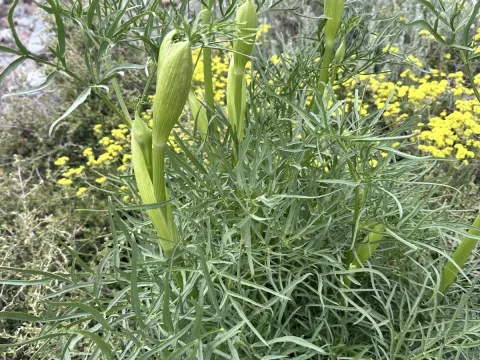
Angelica lineariloba
Angelica lineariloba
Angelica lineariloba seeds require a period of cold stratification to break dormancy, which is best achieved through sowing in late autumn for natural winter chilling.
What the section contains
Angelica lineariloba
If spring planting is preferred, seeds must be kept in moist conditions at temperatures between 2 and 5 degrees Celsius for several weeks prior to sowing.
The seeds should be planted at a shallow depth of approximately 1 centimeter, as they require light and limited soil coverage to germinate effectively.
Row spacing is typically set at 50 to 60 centimeters to allow for mechanical weeding and to ensure that the developing rosettes have enough space to expand.
Uniformity in sowing is critical, and using precision seeders can help maintain the density required for optimal crop development during the first growing season.
This species belongs to the Apiaceae family and thrives in well-drained, nutrient-rich soils with a high organic matter content to support its vigorous root system.
The plant performs best in locations that provide full sun exposure, although it can tolerate partial shade, particularly in regions with intense summer heat.
Consistent soil moisture is essential for success, especially during the early stages of development and throughout the peak of the growing season.
The ideal climatic conditions involve moderate temperatures and sufficient rainfall; however, the plant is quite hardy once established in the ground.
Soil pH should ideally be maintained near neutral to slightly acidic levels to ensure the maximum bioavailability of nutrients for the growing plants.
Fungal diseases, including various types of mildew, represent the most significant threat to plant health, particularly in stagnant or overly humid environments.
Root rot caused by poor soil drainage can severely impact crop yields and weaken the overall vitality of the plant population in the field.
Insect pests, such as aphids, can cause significant damage to the foliage and flower stalks, necessitating early intervention and monitoring programs.
Integrated pest management strategies are recommended, focusing on maintaining field hygiene and promoting biodiversity to naturally control pest populations.
Preventative measures, such as proper crop rotation and avoiding over-densification, are crucial to reducing the incidence of disease within the plantation.
The harvesting of roots typically occurs in the autumn of the second year, as this is when the plant's active compounds reach their peak concentration.
Mechanical harvesting equipment should be adjusted to minimize damage to the root system, ensuring that the primary roots are extracted with minimal bruising.
Once harvested, the roots must be thoroughly cleaned of soil and debris, using running water and appropriate washing stations to prepare for the drying process.
Drying is performed in controlled environments with temperatures maintained below 50 degrees Celsius to prevent the loss of volatile oils and medicinal qualities.
Once properly dried, the material should be packaged and stored in a cool, dry place away from direct light to maintain its long-term quality and potency.