
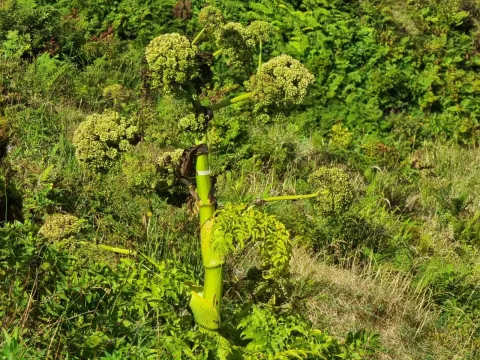
Angelica lignescens
Angelica lignescens
Angelica lignescens, a member of the Apiaceae family, is a perennial herbaceous plant known for its semi-woody stem base. Seeds are typically sown in late autumn to ensure natural cold stratification, which is essential for uniform germination in the following spring.
What the section contains
Angelica lignescens
For spring sowing, seeds require an artificial cold stratification process lasting 1-2 months at temperatures near 2-4 degrees Celsius. Seeds should be planted at a shallow depth of 1-2 centimeters to maintain optimal moisture levels for early development.
Widely-spaced rows with 45-60 centimeters between them are recommended to allow for full root development and proper air circulation. After the initial emergence, thinning is necessary to ensure each plant has enough space to establish its leaf rosette properly.
The plant demonstrates slow growth during its first year, focusing energy on building a robust root system and a basal leaf rosette. The vertical stem, which can grow quite tall, typically emerges in the second year once the plant has reached sufficient maturity.
Soil moisture management during the early stages of growth is critical, as the seedling's root system is not yet deep enough to withstand surface drying. Regular, gentle irrigation is recommended until the young plants have fully adapted to their environment.
Angelica lignescens thrives in fertile, well-draining loamy or sandy-loam soils rich in organic matter. A neutral to slightly acidic soil pH is ideal for promoting nutrient uptake and ensuring vigorous growth of the plant throughout its life cycle.
The crop requires consistent moisture but is intolerant of waterlogged soils, which can lead to rapid root rot. Partial shade or protected areas are preferred in regions with high temperatures, as the plant does not perform well under intense, direct sun.
Soil preparation should involve deep tillage and the incorporation of mature compost or well-rotted manure during the previous season. This enhances soil structure and provides the nutrient base necessary for the development of the plant's taproot.
Maintenance tasks include regular inter-row cultivation to aerate the soil and prevent weed competition. Weed control is particularly important in the first year, as young seedlings can easily be outcompeted by aggressive weeds in the garden.
The plant exhibits good cold hardiness, but winter protection via mulching is advisable in regions with little snow cover to prevent freezing of the crown buds. This simple practice ensures higher survival rates after the harsh winter months.
Fungal diseases such as powdery mildew and grey mold (Botrytis) represent the most significant threat to the crop, especially in humid conditions with poor airflow. Maintaining proper spacing and hygiene is essential for disease prevention.
Pests like the parsnip webworm and various aphid species can cause substantial damage to the leaves and developing flower heads. Regular monitoring of the foliage is required to identify pest outbreaks early before they spread across the entire crop.
Soil-dwelling pests, including wireworms, can damage the roots and weaken the overall plant vitality. Deep autumn plowing is a recommended cultural practice to disrupt the life cycles of these pests and reduce their population in the field.
Crop rotation is a vital component of integrated pest management; it is recommended not to replant Apiaceae species on the same field for at least 3-4 years. This significantly reduces the buildup of host-specific soil pathogens.
When chemical intervention is necessary, it must be done with caution, adhering to strict withdrawal periods to ensure product safety. Preference should always be given to biological controls and preventive measures to maintain ecological balance.
The harvesting of roots is typically conducted in the autumn of the second year or in early spring of the third year. This timing ensures the highest concentration of active compounds, which is critical for medicinal and commercial quality.
Roots are carefully dug up, ensuring minimal mechanical damage, and immediately washed to remove soil debris. Drying should occur in well-ventilated, shaded areas at temperatures not exceeding 45 degrees Celsius to preserve volatile oils.
The aerial parts, such as leaves or stems, may be harvested during the budding phase if specific botanical products are desired. Harvesting during dry, sunny weather prevents spoilage and mold development during the drying process.
Storage of the dried product requires airtight, moisture-proof containers kept in a cool, dark environment to retain potency and aroma. Properly processed and stored material can remain effective for 2 to 3 years.
Strategic harvest management is essential, as the timing directly impacts the concentration of active constituents. Premature harvest results in lower yield quality, while delayed harvest may lead to tissue lignification, making the plant less suitable for processing.