
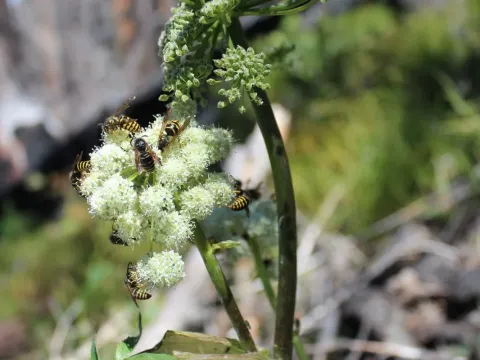
Angelica genuflexa
Angelica genuflexa
Angelica genuflexa, commonly known as kneeling angelica, is a perennial herbaceous plant belonging to the Apiaceae family. It is native to the coastal regions and damp woodlands of North America and East Asia, thriving in cool, riparian environments.
What the section contains
Angelica genuflexa
To cultivate this crop successfully, growers must provide consistently moist, nutrient-rich soils. The plant excels in areas with high water tables, but it requires well-aerated soil to prevent root suffocation, making soil structure management a priority for farmers.
Botanically, it is characterized by a distinctive, often zig-zagging or "kneeling" stem structure and large, compound leaves. It produces complex umbels of small flowers that are highly attractive to pollinators, contributing to the local biodiversity of the farming area.
Agronomic practices focus on maintaining shade during peak summer heat, as direct sunlight can cause dehydration and stunt plant development. Mulching is often used to maintain soil moisture levels and suppress weed competition during the establishment phase.
Commercially, Angelica genuflexa is valued for its potential in herbal medicine and as a source of aromatic oils. Its roots contain compounds that have historically been utilized for their therapeutic properties, making it a niche crop for specialized markets.
The primary threats to this crop include fungal pathogens, particularly root rot, which typically occurs in waterlogged soil. Leaf spot diseases may also arise if the canopy density is too high, leading to reduced photosynthetic efficiency.
Pests such as aphids and umbellifer-specific beetles can cause significant damage to the foliage and flower stalks. These pests not only weaken the plant but can also serve as vectors for various plant viruses common to the Apiaceae family.
Managing these threats requires a systematic approach, starting with site selection that allows for natural drainage. Proper airflow between plants is essential to mitigate the conditions that favor fungal growth and insect nesting.
Integrated Pest Management (IPM) strategies are recommended, focusing on biological controls whenever possible. Maintaining clean tools and preventing the introduction of contaminated plant material are critical sanitation steps for farm health.
Regular scouting of the fields is essential to detect early symptoms of infestation. Prompt removal and destruction of affected plant parts help prevent the spread of localized outbreaks throughout the plantation.