
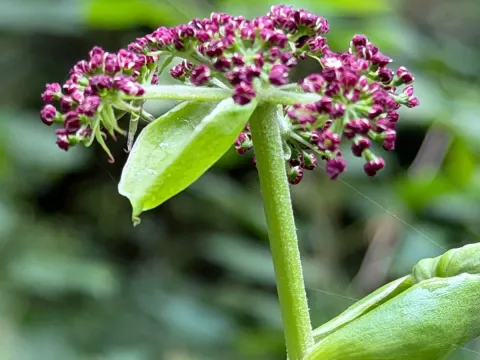
Angelica decursiva
Angelica decursiva
The sowing of Angelica decursiva seeds is typically performed in late autumn or early spring, provided the seeds have undergone a necessary period of cold stratification.
What the section contains
Angelica decursiva
When sowing in the spring, the soil temperature should be sufficient, and seeds should be placed at a depth of 1-2 cm, maintaining consistent soil moisture until emergence.
For large-scale farming, utilizing row spacing of approximately 60 cm is recommended to facilitate effective weeding and mechanical maintenance of the plantation.
As this is a perennial plant, spacing must account for the future expansion of the leaf rosette and the development of the root system over several growing seasons.
Proper preparation of the seedbed is essential, as the young seedlings are delicate and require a competition-free environment during the first phase of their development.
Angelica decursiva is a member of the Apiaceae family that thrives in fertile, well-drained loamy soils rich in organic matter and nutrients.
The plant requires moderate soil moisture levels to reach its full potential, though it does not tolerate waterlogging, which can cause root decay.
Optimal growth is achieved in sunny locations, although the crop can also adapt to partial shade, making it quite versatile across various climatic zones.
The preferred pH range for the cultivation of this species is between 6.0 and 7.0, ensuring the optimal availability of essential micronutrients in the substrate.
Regular cultivation of the soil between rows helps to maintain soil aeration and suppress weed growth, which is critical during the crop's establishment period.
Major threats to Angelica decursiva production include root rot and powdery mildew, often resulting from poor drainage or excessive humidity in the growing area.
Pests such as aphids and umbelliferous moths can cause significant damage to the foliage, thereby reducing the plant's overall vigor and yield of the root biomass.
Adhering to strict crop rotation practices is the primary defense strategy, preventing the build-up of soil-borne pathogens related to the Apiaceae family.
Integrated pest management, including the use of biological control agents, is recommended to maintain the quality and purity of the harvested raw material.
Constant monitoring of the field allows for early detection of infestations, enabling growers to take localized actions before the health of the entire crop is compromised.
Harvesting of the roots usually occurs in the second or third autumn, at which point the plant has accumulated the highest concentration of active compounds.
Once lifted from the soil, the roots must be thoroughly cleaned of debris and soil, followed by the removal of smaller lateral rootlets to ensure a high-grade product.
The drying process must be conducted in well-ventilated areas at controlled temperatures, typically not exceeding 45 degrees Celsius, to prevent degradation.
Mechanical drying equipment can significantly improve efficiency, reducing the risk of mold formation and ensuring the uniformity of the final dry material.
Final storage should be in a cool, dry, and dark environment, using containers that protect the produce from moisture and pests until it is ready for processing.