
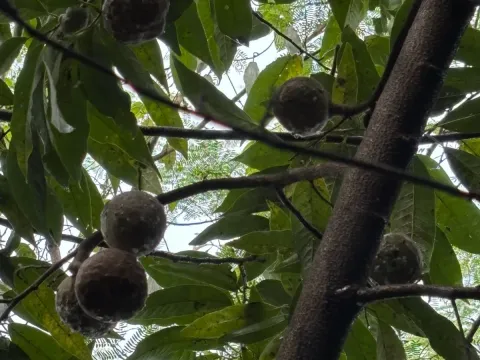
Annona
Annona L.
Annona (Annona L.) is a genus of flowering plants in the family Annonaceae, comprising numerous species of tropical fruit-bearing trees. Native to the tropical regions of the Americas, these plants are now widely cultivated in frost-free climates worldwide.
What the section contains
 Annona longiflora
 S. Watson
Annona longiflora
Annona longiflora S. Watson
 Annona mucosa
 Jacq.
Annona mucosa
Annona mucosa Jacq.
 Atemoya
Annona x atemoya Mabb.
Atemoya
Annona x atemoya Mabb.
 Cherimoya
Annona cherimola Mill.
Cherimoya
Annona cherimola Mill.
 Custard apple
Annona reticulata L.
Custard apple
Annona reticulata L.
 Ilama
Annona diversifolia Saff.
Ilama
Annona diversifolia Saff.
 Mountain soursop
Annona montana Macfad.
Mountain soursop
Annona montana Macfad.
 Pond apple
Annona glabra L.
Pond apple
Annona glabra L.
 Soncoya
Annona purpurea Moc. & Sessé ex Dunal
Soncoya
Annona purpurea Moc. & Sessé ex Dunal
 Soursop
Annona muricata L.
Soursop
Annona muricata L.
 Sugar apple
Annona squamosa L.
Sugar apple
Annona squamosa L.
Annona
The climate requirements for Annona are strictly tropical, favoring temperatures between 22 and 30 degrees Celsius. The trees are highly sensitive to frost and cold winds, which restricts their successful cultivation to tropical and subtropical zones or controlled greenhouse environments.
For optimal growth, Annona requires deep, well-draining, and fertile soil. The soil pH should ideally range from neutral to slightly acidic. Providing proper drainage is essential, as waterlogged conditions frequently lead to root rot and eventual tree decline.
Agricultural management involves consistent irrigation during dry spells and ensuring high atmospheric humidity, which is particularly critical during the flowering phase to prevent flower drop. Regular pruning is necessary to maintain a manageable tree size and enhance yield quality.
Economic uses of Annona are primarily centered on its edible fruits, valued for their creamy texture and distinctive, sweet-tart flavor profiles. Additionally, some species are utilized in agroforestry and traditional medicinal applications due to various bioactive compounds.
Major pests affecting Annona include mealybugs and scale insects, which cluster on leaves and stems, extracting plant sap. Infestations can severely weaken the tree and serve as a vector for various secondary infections.
Fruit flies pose a major threat to commercial fruit production, as larvae bore into the developing fruit. Controlling these pests often requires a combination of trapping, sanitation, and targeted biological control strategies.
Fungal diseases like anthracnose and various types of root rot are common in humid environments. These diseases can cause foliage damage, branch dieback, and significant loss of fruit before it reaches maturity.
Effective management includes keeping the orchard floor free of rotting fruit and debris to reduce pest breeding grounds. Proper spacing between trees is also essential to ensure adequate airflow and reduce ambient humidity within the canopy.
Regular scouting and early intervention remain the cornerstones of successful Annona health management, allowing growers to address localized pest issues before they escalate into orchard-wide problems.
Harvesting Annona is a delicate process because the fruits are highly perishable and prone to bruising. Fruit should be harvested by hand when the skin begins to soften and the color shifts slightly from green to a lighter shade.
Timing the harvest is vital; fruit picked too early may not ripen properly, while fruit left on the tree too long may become overripe and susceptible to insect damage or rot. Daily inspection of the orchard during the ripening season is recommended.
Once harvested, the fruit should be handled with extreme care and stored in a cool, well-ventilated area. Due to their short shelf life at room temperature, logistics must be efficient to get the product to market quickly.
Cold storage is an option to extend shelf life, provided that temperatures are kept strictly around 10–12 degrees Celsius. Temperatures lower than this range can cause chilling injury, leading to skin browning and flavor deterioration.
Yield performance is highly dependent on effective pollination. In many commercial orchards, manual pollination is performed to ensure a high fruit set, as natural pollinators may not be present in sufficient numbers to maximize production potential.